

A 500-watt solar panel in 2026 produces between 750 and 1,000 kilowatt-hours per year in strong U.S. solar states, costs roughly 140 to 300 dollars at the module level and 350 to 700 dollars installed, depending on scale, and is primarily optimized for commercial rooftops, carports, ground-mount systems, and large residential arrays with open roof space.
It is not automatically superior to smaller residential modules because overall system efficiency depends more on layout density, inverter design, voltage limits, and temperature performance than on nameplate wattage alone.
The decision to use 500W modules should be based on structural capacity, string voltage planning, and total system economics rather than marketing appeal.
What 500 Watts Actually Means in Real Conditions
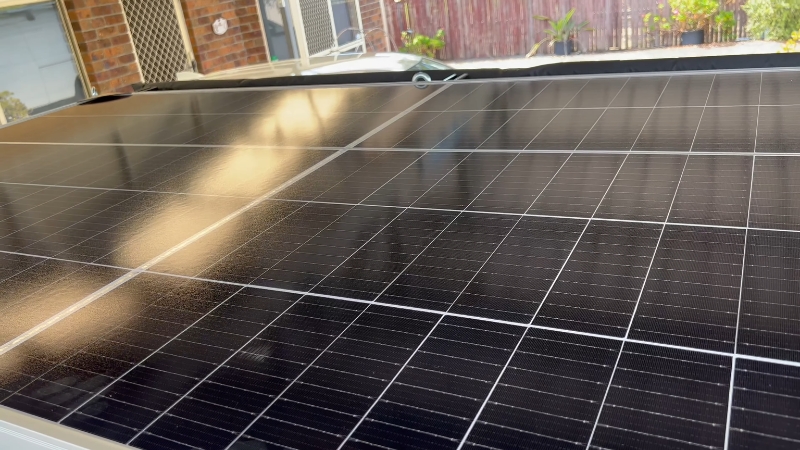
The 500-watt rating refers to output under Standard Test Conditions, defined as 1000 watts per square meter of irradiance, 25 degrees Celsius cell temperature, and air mass 1.5. These laboratory settings rarely exist outside controlled environments.
In actual installations, cell temperatures often rise to 45 to 70 degrees Celsius, which reduces output due to the negative temperature coefficient of silicon modules. Most modern 500W modules carry a temperature coefficient between minus 0.29 percent and minus 0.35 percent per degree Celsius.
That means for every degree above 25°C, output drops by roughly one-third of one percent.
In hot climates such as Arizona, Nevada, and inland Texas, summer rooftop temperatures can reduce instantaneous output by 10 to 18 percent during peak afternoon hours. However, total annual energy yield remains strong because these regions benefit from high irradiance and longer peak sun duration.
The table below shows realistic output behavior under temperature stress.
Condition
Cell Temperature
Output vs 500W Rating
STC Lab Condition
25°C
500W
Mild Outdoor Condition
35°C
~485W
Hot Rooftop Summer
55°C
~455W
Extreme Heat Surface
70°C
~430W
This illustrates why nameplate wattage alone does not represent daily production.
Annual Energy Production by U.S. Region
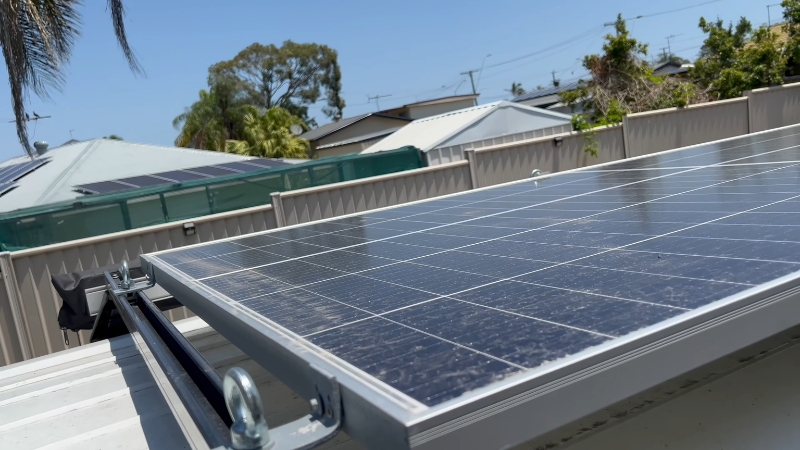
Energy production depends on peak sun hours, not daylight duration. Peak sun hours represent the equivalent number of hours per day at 1000 W/m² irradiance.
Using National Renewable Energy Laboratory solar resource data, a 500W panel produces the following annual energy in different regions after applying 14 to 18 percent system losses for inverter, wiring, mismatch, and heat.
Region
Avg Peak Sun Hours
Daily Output (kWh)
Annual Output (kWh)
Arizona
6.0
3.0
1,095
Southern California
5.5
2.75
1,003
Texas
5.0
2.5
912
Florida
4.8
2.4
876
Midwest
4.3
2.15
785
Northeast
3.8
1.9
693
These values assume standard tilt and minimal shading.
The average U.S. household consumes approximately 29 to 30 kWh per day according to U.S. Energy Information Administration data. A single 500W panel in Texas producing 2.5 kWh per day offsets roughly 8 percent of daily household electricity use.
A 6 kW system built from twelve 500W panels produces approximately 10,900 kWh annually in Texas, which aligns closely with average household demand in many states.
Physical Dimensions and Structural Considerations
Most 500W modules in 2026 use 182mm or 210mm wafer formats and measure between 2.1 and 2.3 meters long and roughly 1.1 to 1.3 meters wide. Weight typically ranges from 27 to 32 kilograms per module.
Because of this size, installation requires more handling care, and roof loading calculations must account for concentrated weight distribution and wind uplift surface area.
The table below summarizes physical characteristics compared to common residential panels.
Specification
500W Module
440W Residential Module
Length
2.2m
1.75m
Width
1.15m
1.05m
Weight
29kg
22kg
Efficiency
22–23%
20–22%
Ideal Use
Commercial / Ground
Residential Roof
While 500W modules reduce the number of panels needed for a target system size, their footprint may reduce layout flexibility on complex rooftops with dormers or vents.
Technology Used in 2026 500W Panels
View this post on Instagram
In 2026, most 500W panels use either TOPCon or advanced PERC cell architecture. TOPCon has become dominant due to improved efficiency and lower degradation rates. Typical module efficiencies range from 21.5 to 23.5 percent.
First-year degradation rates are generally around 1 percent or less, followed by 0.4 percent annually thereafter. After 25 years, most reputable modules guarantee 87 to 89 percent of the original output.
The following table summarizes performance warranties.
Year
Expected Output Retention
Year 1
98–99%
Year 10
92–94%
Year 25
87–89%
These warranties align with commercial financing standards.
Cost of a 500 Watt Solar Panel in 2026
Module pricing in 2026 depends heavily on global polysilicon supply and shipping conditions. As of early 2026, utility-scale procurement prices range between 0.28 and 0.40 dollars per watt at volume. Retail distributed pricing is higher.
Installed residential pricing ranges between 2.40 and 3.20 dollars per watt for complete systems, including labor, inverter, racking, permitting, and interconnection.
The cost breakdown appears below.
Cost Component
Per Watt Estimate
Module
0.30–0.60
Inverter
0.20–0.35
Racking
0.10–0.20
Labor
0.40–0.70
Permitting / Soft Costs
0.80–1.20
Total Installed
2.40–3.20
A 6 kW system using 500W panels may therefore cost between 14,400 and 19,200 dollars before federal tax credits. The 30 percent federal Investment Tax Credit reduces net cost significantly.
Battery Pairing and Storage Planning
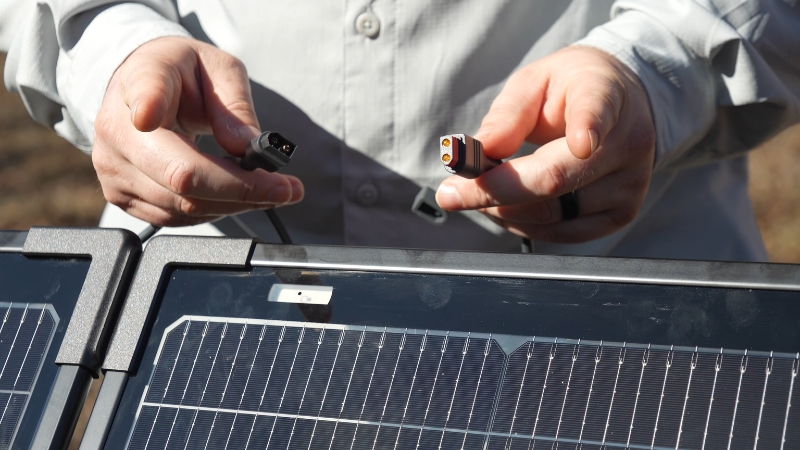
A single 500W panel producing 2.5 kWh daily requires roughly 2.5 kWh of usable battery capacity to store a full day’s production. Modern lithium iron phosphate battery systems are typically sold in 5 kWh to 15 kWh increments.
A 48V 100Ah lithium battery provides approximately 4.8 kWh of gross capacity, typically 4.3 kWh usable after depth-of-discharge limits. That single battery comfortably stores daily production from one 500W panel in strong solar regions.
The table below illustrates battery pairing.
Panel Count
Daily Production (Texas)
Recommended Battery
1 Panel
2.5 kWh
5 kWh battery
4 Panels
10 kWh
10–15 kWh battery
12 Panels
30 kWh
30–40 kWh battery
Storage planning must consider nighttime consumption rather than panel size alone.
Inverter Compatibility and Voltage Planning
A 500W panel typically has a maximum power voltage between 38 and 42 volts and an open circuit voltage of around 48 to 52 volts. In cold climates, open circuit voltage rises.
String sizing must ensure total string voltage does not exceed inverter limits, commonly 600V or 1000V for residential and 1500V for commercial systems.
Fewer high-wattage modules per string can increase current, which must remain within inverter input specifications. Microinverter systems must also be rated for 500W input, as older 350W microinverters may clip production.
Practical Use Cases Where 500W Panels Make Sense
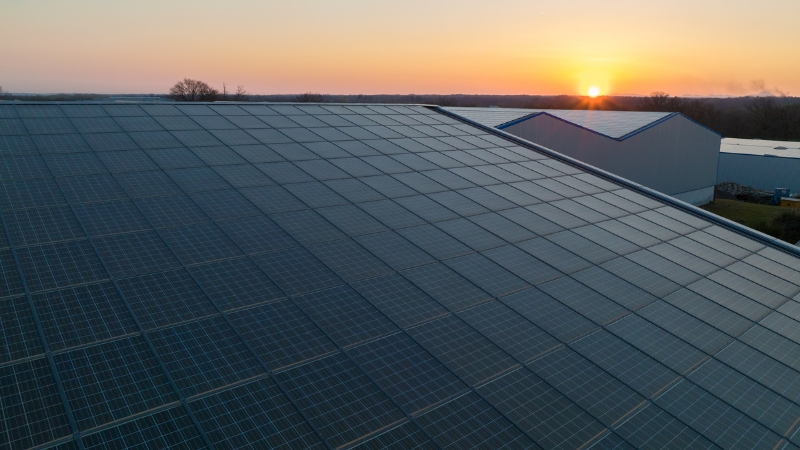
Large open commercial roofs, agricultural buildings, warehouses, and ground-mounted systems benefit from reduced racking labor per watt. Fewer panels reduce mounting hardware and electrical connections. In utility projects, large modules reduce balance-of-system cost.
Residential homes with simple south-facing roof planes may also benefit if structural loading and inverter sizing are properly planned.
Homes with segmented roofs often achieve better layout efficiency using smaller modules that fill irregular spaces more effectively.
Final Assessment
@solarwattng Trina 500-Watts solar panel #solarenergy #solarpanels #solarpower #trinasolar #energy ♬ Success Inspirational – StereojamMusic
A 500-watt solar panel in 2026 is efficient, mature, and economically viable. It produces close to 900 to 1,000 kWh annually in high-sun states and carries 25-year performance warranties consistent with industry standards.
For comparison, a 400-watt solar panel remains a common residential choice, offering slightly lower output per module but often greater layout flexibility for standard home rooftops.
It reduces panel count in larger systems and lowers commercial installation labor per watt. It is not inherently superior for small residential rooftops where space geometry and inverter compatibility may outweigh raw wattage.