
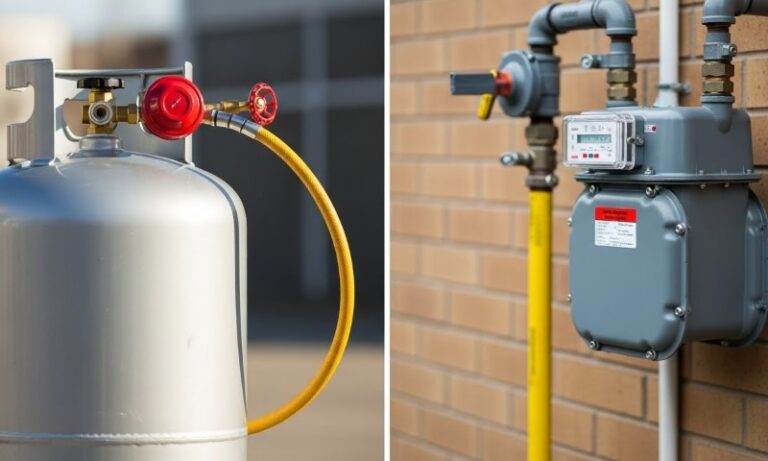
Propane and natural gas sit quietly behind millions of warm homes, hot showers, working stoves, and humming generators. Both deliver flame on demand. Both get treated as “gas” in everyday talk.
Real life gets more complicated once equipment, storage, safety behavior, and long-term cost enter the picture. A homeowner choosing a heating system, a builder planning a new development, or a rural property owner upgrading appliances runs into practical differences fast.
To make everything clearer, we prepared a breakdown, grounded in how both fuels actually behave in daily use.
Highlights
- Natural gas flows by pipeline with no on-site storage; propane relies on a refillable tank on the property.
- Propane carries more energy per unit volume, so appliances use smaller orifices and higher pressure.
- Propane sinks and pools in low spaces during leaks, and natural gas rises and disperses upward.
- Natural gas produces less CO₂ per unit of heat, pand ropane offers better off-grid and outage resilience.
Propane vs Natural Gas in Quick Terms
Natural gas reaches properties through underground pipeline networks. The main component is methane, written chemically as CH₄.
Propane is written as C₃H₈ and arrives by truck as a pressurized liquid, then vaporizes inside a storage tank during use.
Urban and suburban neighborhoods with existing gas mains usually default to natural gas. Rural properties, farms, construction sites, and off-grid homes rely heavily on propane because pipeline access is missing.
Everything else flows from that basic distinction.
Natural Gas Basics
Natural gas comes from underground reservoirs and travels through processing plants before entering distribution networks.
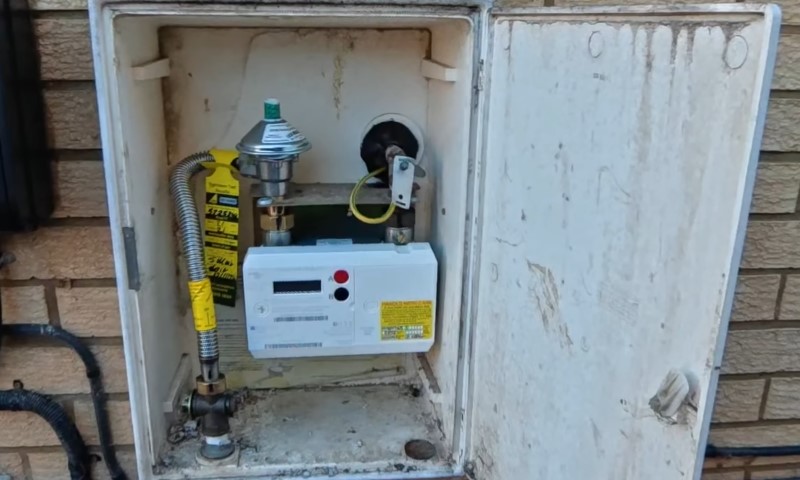
Methane makes up most of the mix, along with smaller amounts of other gases. A household meter records usage as gas flows continuously into the property.
Key daily realities include:
- No fuel tank sitting on the property
- Metered billing based on volume and heat content
- Dependence on regional pipeline networks
- Outages tied to distribution system issues rather than on-site storage levels
For specialized industrial use, natural gas can be compressed or liquefied, but household systems rely almost entirely on pipeline delivery.
Propane Basics
Propane belongs to a broader group called hydrocarbon gas liquids. Production occurs during natural gas processing and crude oil refining.
Propane leaves processing plants as a liquid, stored in steel tanks under pressure. When drawn off, the liquid turns into vapor that feeds appliances.
Practical implications look different:
- A visible tank sits on the property
- Fuel arrives by delivery truck
- Owners monitor tank levels
- Refills become a planning task rather than a background utility function
Pure propane has no smell. An odorant called mercaptan gets added so leaks can be detected easily by human senses.
Energy Content and What “Hotter” Means in Daily Use
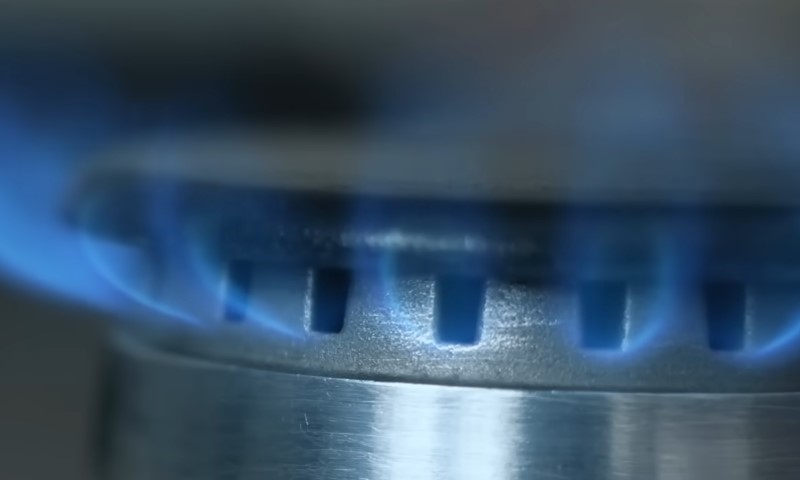
People often say propane burns hotter. Real performance depends on how much heat each fuel carries and how appliances meter fuel into the flame.
Common Planning Numbers
| Fuel | Common unit | Approximate energy |
| Natural gas | 1 cubic foot | 1,036 Btu |
| Natural gas | 1 therm | 100,000 Btu |
| Propane | 1 gallon | 91,452 Btu |
From those values, a few real-world rules of thumb fall out:
- One gallon of propane carries roughly the same energy as about 88 cubic feet of natural gas
- Natural gas heat content shifts slightly by region and source
- Appliance input ratings rely on standardized reference values
Another way to view energy density is to look at gas volume rather than liquid volume.
In standard reference tables, propane vapor holds about 2.45 times more energy per standard cubic foot than natural gas vapor. That fact shapes burner design.
Plain language translation: propane appliances need a smaller gas volume flow to produce the same heat output. Natural gas appliances move more gas volume through wider orifices.
Storage and Delivery Shape Daily Life

Storage and delivery decide how fuel fits into daily routines, refill planning, space requirements, and what happens during outages.
Natural Gas, Continuous Connection
Pipeline delivery feels invisible most of the time. Once the service is installed, gas flows whenever a thermostat calls for heat.
- No refill scheduling
- No storage tanks occupying yard space
- Bills tied to monthly metered usage
The trade-off comes in infrastructure dependence. Storm damage, construction accidents, or distribution problems affect large service areas at once.
Propane, Stored on Site
Propane lives inside a pressurized tank until used. That tank acts as a personal fuel reserve.
Ownership responsibilities include:
- Watching tank percentage
- Arranging deliveries
- Maintaining safe access for delivery trucks
- Respecting placement codes for distance from buildings and ignition sources
Resilience enters the conversation here. During regional power or pipeline disruptions, a filled propane tank continues supplying heat until empty.
The flip side appears when winter demand spikes and a tank runs dry without advance scheduling.
Appliance Compatibility and Pressure
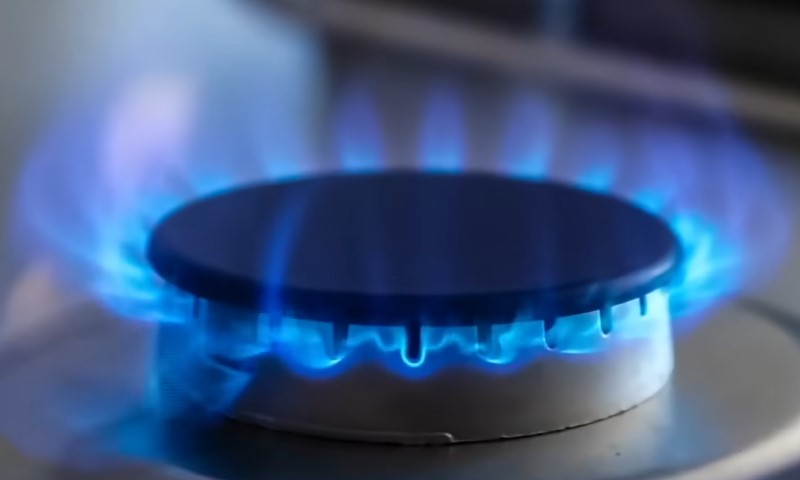
Gas appliances rely on precise pressure and fuel flow. Natural gas and propane use different values.
Typical Pressure Ranges
Training materials often cite:
- Natural gas manifold pressure near 3.5 inches of water column
- Propane manifold pressure near 11 inches of water column
Industry safety codes treat 14 inches of water column as a common threshold for appliance inlet limits and overpressure design.
Because propane vapor carries more energy per unit volume, propane orifices tend to be smaller for the same appliance input rating. Regulators and valves also differ.
Conversion Rules
An appliance built for one fuel does not safely operate on the other without approved conversion kits. Manufacturer parts adjust:
- Orifice size
- Regulator spring tension
- Air-to-fuel ratios
Improvised changes raise risks tied to carbon monoxide, soot buildup, unstable flames, and fire. Manufacturer kits remain the only safe route for conversions.
Leak Behavior and Safety Realities
Both fuels are flammable. Their physical behavior in a leak differs in ways that shape installation rules and emergency response.
Density Relative to Air
- Propane gas carries a relative density of around 1.55 compared to air
- Methane carries a relative density of around 0.55 compared to air
Pooling behavior explains why propane installations avoid below-grade appliance placement unless special ventilation exists.
Flammability Limits
| Gas | Lower explosive limit | Upper explosive limit |
| Propane | 2.1% | 9.5% |
| Methane | 5% | 15% |
Propane reaches an ignitable mixture at a lower concentration in air. In confined spaces, that matters.
Odorization
Both fuels receive mercaptan odorant. Federal pipeline safety rules require that distribution gas to become detectable by smell at about one-fifth of the lower explosive limit. The familiar sulfur-like smell exists for safety.
Any gas odor inside a building requires immediate response according to utility safety guidance. Evacuation and emergency contact procedures apply.
Emissions and Climate Considerations
Heating fuel choices affect carbon output and broader environmental impact. Emissions profiles and upstream supply behavior shape how propane and natural gas perform beyond the living space.
Carbon Dioxide From Combustion
Per unit of delivered energy:
- Natural gas releases about 52.91 kg of CO₂ per million Btu
- Propane releases about 62.88 kg of CO₂ per million Btu
Methane contains more hydrogen relative to carbon, which explains the lower CO₂ value.
Methane Leakage Concerns
Natural gas consists mainly of methane. Methane acts as a strong greenhouse gas when released directly into the atmosphere. Upstream leakage across production, processing, and distribution influences total climate impact.
Propane also leaks when mishandled, though methane draws more attention in climate policy due to its potency.
Homeowners comparing fuels often look at both combustion emissions and supply chain integrity.
How Common Propane Heating Is
About 5% of United States homes rely on propane as a main heating source. Use clusters heavily in portions of the Midwest and Northeast. Regional concentration shapes pricing behavior, supply logistics, and delivery schedules.
Cost and Price Behavior
Energy bills tell the real story of gas choice. Pricing follows different rules depending on delivery model, seasonal demand, and regional supply patterns.
Natural Gas Pricing
Retail natural gas prices vary widely across regions. Contributing factors include:
- Local distribution charges
- Transportation costs
- Market structure
- Seasonal demand
Billing units include therms, cubic feet, and MMBtu. Heat content adjustments convert volume into usable energy billing values.
Propane Pricing
Propane consumption shows strong seasonality. Inventories build in spring and summer, then draw down during fall and winter heating months. Prices often rise with winter demand.
Energy agencies publish weekly residential propane pricing during heating seasons. Weather swings and regional inventory levels influence real bills.
Recent winter outlooks provide seasonal expectations, though actual outcomes follow temperature patterns closely.
Decision Checklist for Homeowners and Builders
@builderbrigade 🏆 My pick: Natural gas if your area has access easier and usually cheaper. Go propane if you’re building in a rural area or off the grid. 👇All the tips and ideas from my videos are organized in here: ✅The Ultimate Home Building Checklist at BuilderBrigade.com . . . If you’re building a house, you’ve got two main options for gas: ✅ Propane – Delivered by truck and stored in a tank (either above ground or buried) ✅ Natural Gas – Comes straight from the utility company through underground lines (no tank needed) Both can power some awesome features like: 🔥 Gas lanterns at your front door 🔥 A direct line to your grill (no more swapping tanks) 🔥 Backyard fire features for the win So what’s your pick? Propane, natural gas, or none at all? #HomeBuilding #PropaneVsNaturalGas #NewConstructionTips #CustomHome #GasLanterns #BackyardFireFeature #HomeBuildingChecklist #BuilderBrigade
Choosing between propane and natural gas often comes down to practical details that shape long-term comfort, safety, and operating costs.
A short checklist helps surface those details before any equipment gets ordered or lines get installed.
Natural Gas Tends to Fit When:
- Existing service lines and meters already exist
- Continuous supply matters more than on-site reserves
- Lower combustion CO₂ per unit of heat carries weight in planning
Propane Tends to Fit When:
- No natural gas mains exist
- Portability or off-grid capability matters
- Stored fuel offers backup value for outages
Questions That Prevent Expensive Mistakes
- What does it cost to extend a gas service line, if extension remains possible
- Which major appliances need conversion or replacement
- Where can a propane tank legally sit according to local codes
- Can delivery trucks access the tank location in winter
Renewable Variants Enter Modern Planning
Renewable fuel options have started showing up in heating and energy conversations more often, especially among homeowners and builders who want long-term flexibility without changing existing gas equipment.
Renewable Natural Gas
Biogas upgraded to pipeline quality becomes renewable natural gas. After purification, it matches conventional natural gas chemically and works with the same appliances.
Raw biogas methane content ranges roughly 45% to 65% before upgrading, depending on feedstock.
Renewable Propane
Renewable propane shares chemical identity with conventional propane and functions as a drop-in replacement. Lifecycle emissions depend on feedstock and production pathways.
Renewable fuels change environmental profiles but leave appliance compatibility and safety rules unchanged.
Practical Usage Examples
Real homes and real projects reveal how each fuel behaves once equipment gets installed and seasons start shifting. The examples below show how propane and natural gas perform in everyday settings.
Rural Farmhouse Heating
A farmhouse without pipeline access often installs:
- A 500 or 1,000-gallon propane tank
- High-efficiency propane furnace
- Propane water heater
- Propane range
Seasonal delivery contracts maintain supply during winter. Backup power systems sometimes pair with propane generators for outage resilience.
Suburban New Construction
A subdivision served by gas mains usually includes:
- Metered natural gas service
- High-efficiency gas furnaces
- Tankless natural gas water heaters
- Gas fireplaces
Homeowners avoid delivery scheduling and yard tank placement.
Temporary Construction Heating
Portable propane heaters provide mobile jobsite heat where pipelines remain unavailable. Tanks mount on skids or trailers and rotate through refilling schedules.
FAQs
Closing Thoughts
Both fuels deliver dependable heat and flame control. The real differences live in storage, delivery logistics, appliance design, safety behavior, seasonal pricing, and emissions profiles.
A good decision flows from access to infrastructure, property layout, appliance plans, and tolerance for fuel management tasks.
Homeowners who map out those variables avoid surprise expenses later and gain steady comfort through every season.