
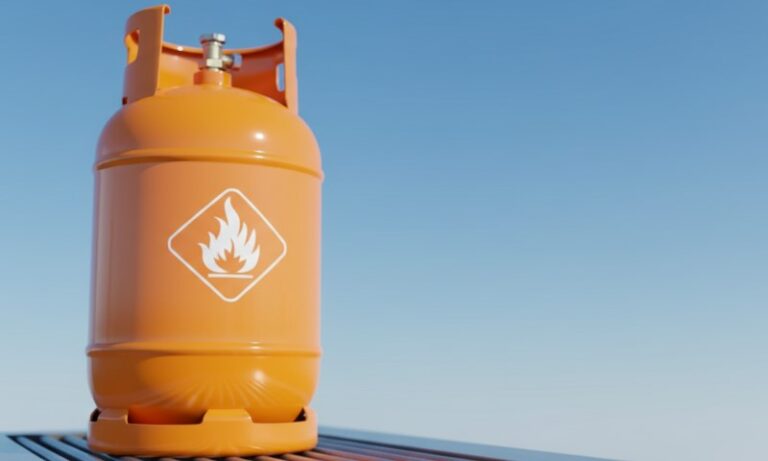
LPG, or liquefied petroleum gas, is a group of hydrocarbon gases primarily composed of propane and butane that are stored and transported in liquid form under moderate pressure. It is produced as a byproduct of natural gas processing and crude oil refining, and it is widely used as a fuel for heating, cooking, hot water systems, industrial processes, and vehicle propulsion.
At normal atmospheric pressure, LPG exists as a gas, but it becomes a liquid at relatively low pressure, which makes it practical to store in cylinders and tanks and move long distances without complex infrastructure.
Chemical composition and physical properties
LPG is not a single substance but a mixture, most commonly propane (C₃H₈), butane (C₄H₁₀), or a blend of the two. The exact composition varies by country, climate, and application.
Propane vaporizes at minus 42 degrees Celsius, while butane vaporizes at minus 0.5 degrees Celsius, which is why propane-rich blends are used in colder regions. In liquid form, LPG occupies roughly 1/250 of the volume it would take up as a gas, a key reason for its economic storage and transport.
From a combustion standpoint, LPG has a high calorific value and burns cleanly. It produces significantly lower particulate emissions than coal or diesel and generates less carbon dioxide per unit of energy than many other fossil fuels. However, it is still a hydrocarbon fuel and contributes to greenhouse gas emissions when burned.
| Property | Propane | Butane |
| Chemical formula | C₃H₈ | C₄H₁₀ |
| Boiling point at 1 atm | −42 °C | −0.5 °C |
| Typical use | Heating, vehicles, cold climates | Cooking, lighters, warm climates |
| Energy content (MJ/kg) | ~50 | ~49 |
How LPG is produced
Globally, around 60 percent of LPG supply comes from natural gas processing, with the remainder produced during crude oil refining. When raw natural gas is extracted from underground reservoirs, it contains heavier hydrocarbons that must be separated before the gas can enter pipelines. These separated components include propane and butane, which are then pressurized into liquid form.
In oil refineries, LPG is recovered during distillation and cracking processes that break down heavier crude oil fractions into usable fuels.
Countries with large oil and gas industries, such as the United States, Saudi Arabia, and Qatar, are among the world’s largest LPG producers.
According to international energy data, global LPG production exceeded 330 million metric tons annually by the early 2020s, reflecting its growing role in residential energy and petrochemical feedstocks.
Storage and transportation
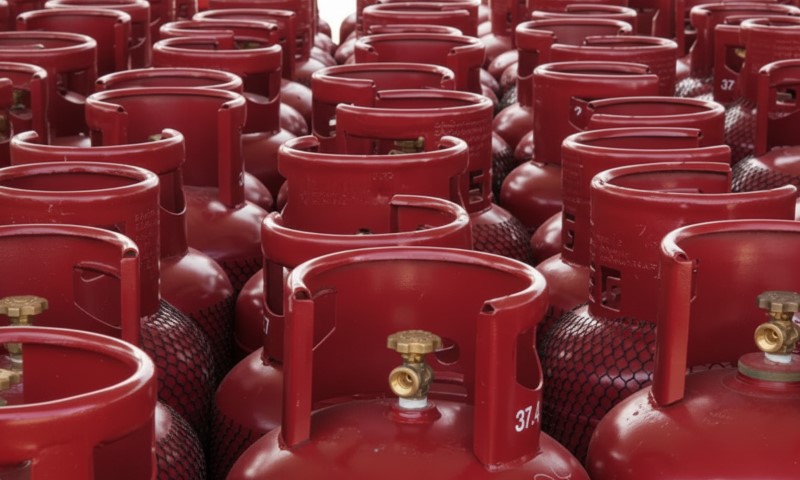
LPG is stored as a liquid under pressure in steel cylinders, bulk tanks, or large underground caverns.
Unlike liquefied natural gas, it does not require cryogenic temperatures, which simplifies logistics and reduces cost.
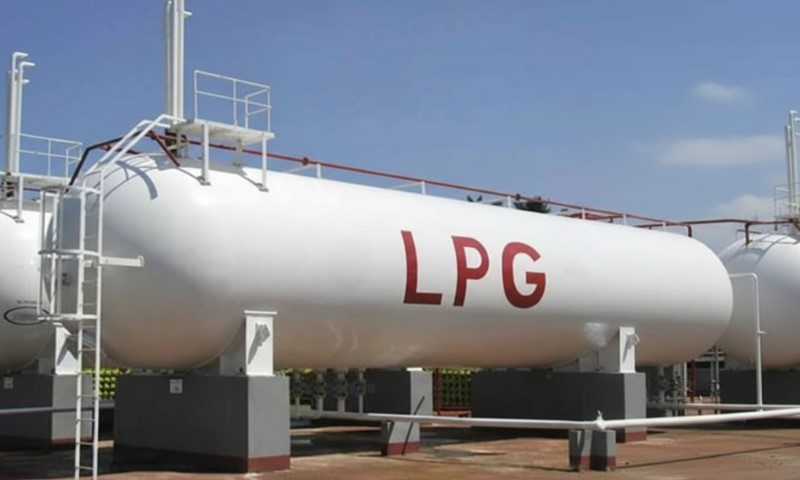
Cylinders used in households typically range from 5 to 50 kilograms, while bulk storage tanks can hold several thousand liters.
Transportation occurs via road tankers, rail cars, ships, and pipelines. Maritime LPG trade has grown steadily over the last two decades, particularly in Asia, where demand for cooking fuel and petrochemical feedstock has expanded.
Safety standards for LPG storage and transport are strict because the gas is heavier than air and can accumulate near the ground if released, creating an explosion risk in confined spaces.
Common uses of LPG
LPG’s versatility is one of its defining characteristics. In residential settings, it is widely used for cooking, space heating, and water heating, especially in areas without access to natural gas pipelines.
In rural regions across Africa, Asia, and parts of Europe, LPG has been promoted as a cleaner alternative to biomass and kerosene for cooking, reducing indoor air pollution.
Industrially, LPG is used for metal cutting, glass production, ceramics, food processing, and as a feedstock in petrochemical manufacturing. In transportation, LPG is known as autogas when used as a vehicle fuel. It powers millions of cars, taxis, and buses worldwide, particularly in countries such as Turkey, South Korea, Poland, and Italy.
| Sector | Typical LPG applications |
| Residential | Cooking, heating, and hot water |
| Commercial | Restaurants, hotels, laundries |
| Industrial | Kilns, furnaces, forklifts |
| Transport | Autogas for cars and fleets |
| Agriculture | Crop drying, pest control |
LPG versus natural gas and other fuels
View this post on Instagram
Although LPG and natural gas are often compared, they differ in important ways. Natural gas is primarily methane and is usually delivered via pipelines, while LPG is heavier, stored as a liquid, and distributed in containers. LPG contains more energy per unit volume than natural gas, which can be advantageous where space is limited.
Compared to gasoline and diesel, LPG generally produces lower nitrogen oxides and particulate emissions, contributing to better local air quality. Its carbon dioxide emissions per unit of energy are lower than coal and oil but higher than renewable energy sources.
These characteristics have positioned LPG as a transitional fuel in many energy strategies.
| Fuel | CO₂ emissions (kg per GJ, approx.) | Storage form |
| Coal | 90–95 | Solid |
| Diesel | 74–77 | Liquid |
| LPG | 63–65 | Liquid under pressure |
| Natural gas | 56–58 | Gas |
| Electricity (renewable) | Near zero | Electrical |
Safety characteristics and odorization
Pure LPG is colorless and odorless. For safety reasons, an odorant, typically ethyl mercaptan, is added so leaks can be detected easily by smell. LPG is non-toxic, but it can displace oxygen in enclosed spaces, leading to asphyxiation risks. Because it is heavier than air, leaked gas tends to settle at low points, which is why ventilation and proper installation are critical.
Modern LPG systems incorporate pressure relief valves, excess flow valves, and automatic shut-off mechanisms.
Accident statistics from countries with mature LPG markets show that, when properly installed and maintained, LPG systems have safety records comparable to or better than many other conventional fuels.
Environmental and economic considerations
From an environmental perspective, LPG occupies a middle ground. It is cleaner than coal, wood, and many petroleum fuels in terms of local pollutants, but it is still a fossil fuel.
Life-cycle analyses show that LPG can reduce greenhouse gas emissions by 20 to 50 percent compared to traditional solid fuels used for cooking, which has made it an important component of clean cooking initiatives supported by international development agencies.
Economically, LPG pricing is linked to global oil and gas markets and can be volatile. However, its relatively low infrastructure requirements make it cost-effective for off-grid energy supply. For households and businesses without access to pipelines or stable electricity, LPG often represents a reliable and scalable energy option.
Global role and future outlook
LPG plays a significant role in the global energy system, particularly in regions undergoing urbanization and energy transition.
Demand growth has been strongest in Asia and Africa, driven by population growth and policies aimed at replacing traditional biomass cooking fuels. At the same time, the petrochemical sector continues to rely on LPG as a feedstock for plastics and synthetic materials.
Looking ahead, LPG is expected to remain part of the energy mix for decades, even as renewable energy expands. Its portability, relatively clean combustion, and established supply chains give it a continuing role as a transitional fuel, especially in areas where alternatives are not yet practical or affordable.