
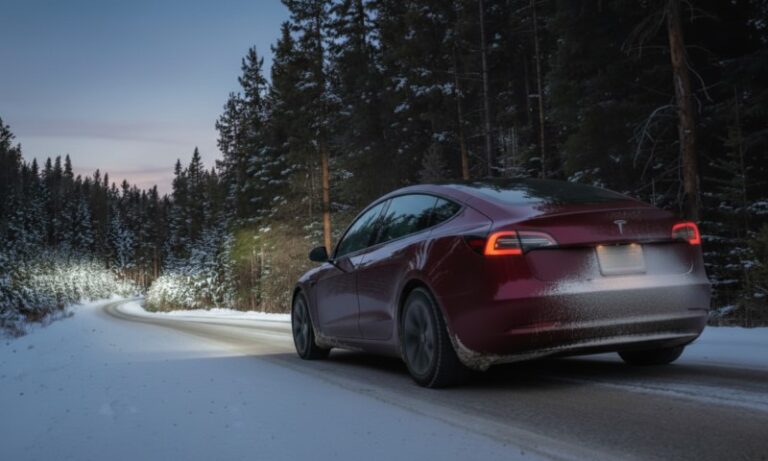
Cold weather changes electric-car behavior in a way drivers notice fast. Miles per charge shrink, fast charging slows down, and some cars feel slightly restrained until the battery warms. None of that signals failure. Winter simply adds loads and limits that stay hidden in mild temperatures, and range turns into a planning exercise rather than a fixed promise.
Range loss never lands on a single clean number. Outside temperature, trip length, speed, wind, precipitation, tire choice, and HVAC settings all stack together. Battery chemistry and thermal hardware matter too.
A heat pump versus a resistive heater can move the needle by double digits. Cars that warm the battery aggressively behave differently than ones that wait until driving begins. Preconditioning before charging often makes or breaks the experience.
Today, we will break down how much range typically drops, why it happens, and what actually helps in the real world.
How Much Range Drops In Cold Weather
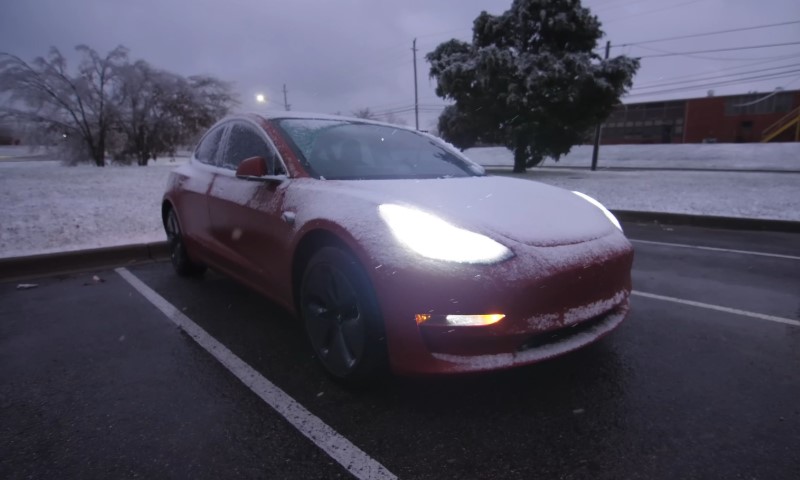
Large test programs and fleet-scale data tend to cluster in a broad band rather than a single figure.
- AAA reports an average range decrease of 41% at 20°F when cabin heat is used.
- U.S. Department of Energy consumer guidance often cites winter range drops up to 32% in freezing temperatures.
- Consumer Reports measured winter highway driving around 16°F and found about 25% range depletion at 70 mph compared with mid-60s conditions.
- The Canadian Automobile Association winter road test showed vehicles driving 14% to 39% less than their official range ratings in winter.
- A U.S. DOE technical summary of Argonne National Laboratory testing showed a mid-size battery electric vehicle averaged a 41% range decrease at 20°F with the cabin set to 72°F, while a comparable internal combustion vehicle dropped about 10% under the same ambient conditions.
Real-world results also depend heavily on equipment. Recurrent’s aggregated data repeatedly shows vehicles with heat pumps keep more usable range in freezing conditions than vehicles relying on resistive heaters.
A Practical Expectation Band For Drivers
For everyday planning, winter range loss often fits into three broad buckets.
Mild Cold Around 40°F To Freezing
Loss is noticeable but manageable, often around 10% to 25%. HVAC use and speed tend to decide where a given drive lands inside that band.
Freezing Down To Around 20°F
Loss commonly sits between 20% and 40%, especially when cabin heat runs steadily. Short trips skew higher because warm-up energy dominates.
Severe Cold Near 0°F And Below
Loss can climb higher, and charging speed often becomes the bigger frustration. Heavy defrost use, headwinds, snow, and repeated cold starts compound quickly.
Why Range Drops, The Main Mechanisms
View this post on Instagram
Cold-weather range loss rarely comes from a single cause. Four overlapping factors usually stack together.
Battery Chemistry Slows Down In The Cold
Lithium-ion cells rely on chemical reactions and ion movement. Lower temperatures slow those reactions and increase internal resistance. Power delivery becomes less efficient, and the car limits certain behaviors to protect the pack.
What drivers notice on the road:
- Higher energy use per mile
- Temporary loss of usable capacity until the battery warms
- Reduced regenerative braking on a cold pack
- Power limits on acceleration in some models during the first miles
AAA summarizes the core issue clearly. Cold slows battery chemistry, and energy must be spent to warm both occupants and the battery because waste engine heat does not exist.
Cabin Heating And Defrost Pull Meaningful Power
Cabin heating is often the single largest controllable winter penalty.
Gasoline vehicles rely on engine waste heat. Electric vehicles must create heat from stored electricity, either through a resistive heater or a heat pump.
National Renewable Energy Laboratory research points out that cabin heating systems drive the greatest efficiency and range losses for EVs in cold weather.
Argonne and NREL testing has shown how large that swing can be. One NREL paper references Argonne results where cabin heating at 20°F reduced range by 20% to 59% compared with no heating, depending on vehicle design and conditions.
Heat Pump Versus Resistive Heat
A heat pump moves heat rather than generating it directly. Under many winter conditions, that means more heat per unit of electricity.
Recurrent’s real-world analysis summarized by InsideEVs showed vehicles with heat pumps retained about 83% of range in freezing conditions, while vehicles without heat pumps retained around 75% on average.
Heat pumps still have limits. DOE technical analysis shows HVAC power draw can drop significantly at 20°F when a heat pump is used, with one example showing a 38% reduction, but benefits fade as temperatures plunge and supplemental resistive heat takes over.
Battery Thermal Management Uses Energy To Protect The Pack
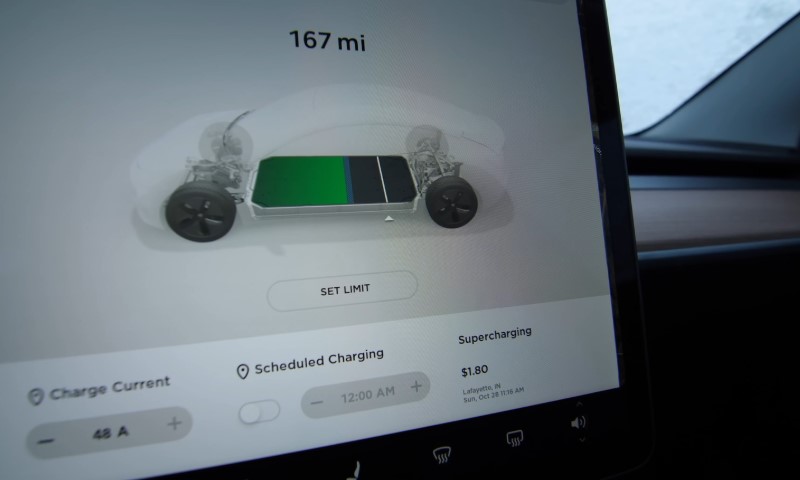
EVs actively manage battery temperature to stay inside safe operating windows and to allow reasonable power and charging. In winter, the car may heat the battery during driving and before fast charging. Unless the vehicle is plugged in, that heating draws from the battery itself.
DOE technical summaries focused on cold ambient testing highlight how energy gets split between cabin comfort and battery conditioning, producing large performance penalties at 20°F under standardized cycles.
Winter Road Load Adds Hidden Resistance
Even with modest HVAC use, winter adds physical resistance that quietly eats range.
- Colder air is denser, raising aerodynamic drag at highway speeds
- Winter tires often have higher rolling resistance than efficiency-focused all-seasons
- Cold tire pressures drop, increasing rolling resistance if not corrected
- Snow and slush add rolling and plowing resistance
- Wet pavement increases energy demand compared with dry roads
Those factors explain why two drives at the same temperature can feel very different depending on wind, precipitation, and road condition.
Conditions, Range Impact, And Root Causes
| Winter Condition | Typical Real-World Range Impact | Main Drivers | What Changes The Outcome Most |
| Cool weather around 40°F to freezing | ~10% to 25% | modest battery inefficiency, moderate HVAC | speed, HVAC setting, trip length |
| Freezing near 20°F with cabin heat | ~20% to 40% | battery inefficiency, cabin heat, pack heating | heat pump presence, plugged-in preconditioning |
| Highway driving near 16°F at ~70 mph | ~25% average in Consumer Reports testing | aerodynamic drag, cold pack, steady HVAC | speed, wind, preconditioning |
| Severe cold near 0°F or below with storms | often materially higher | heavy defrost, pack heating, snow resistance | route planning, charger choice |
| Best-case winter setup | often closer to mild-loss band | efficient HVAC, warmer starting state | heat pump, garage parking |
Why Short Trips Often Look Worse Than Long Drives
One of the most common winter surprises shows up on short errands. A 5-mile trip can cost more range per mile than a 50-mile drive.
Reasons are straightforward:
- Cabin air, glass, seats, and battery all start cold
- Defrost demand peaks at the beginning
- The battery may never reach its efficient temperature window
That pattern explains why steady-state highway testing, like Consumer Reports’ 70 mph runs, often shows smaller percentage losses than real-world stop-and-go errands.
Cold Weather Also Slows Charging
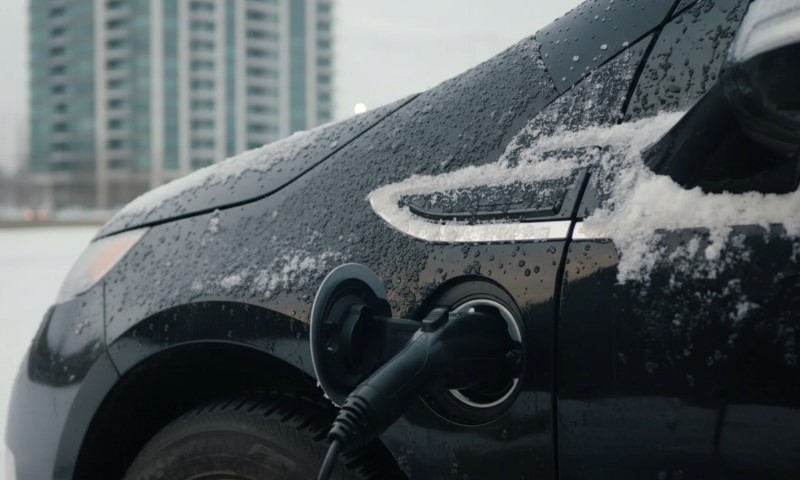
Range loss gets the attention, but winter charging friction often frustrates drivers more.
DC Fast Charging And Cold Batteries
Charging a cold lithium-ion battery too aggressively risks lithium plating and long-term damage. To avoid that, vehicles limit charging power until the pack warms. During cold snaps, drivers can arrive at fast chargers and see low initial power, long sessions, and crowded stations.
Associated Press reporting on cold-weather charging issues in the U.S. highlights battery warming needs and lack of preconditioning awareness as common causes.
Battery Preconditioning Makes A Real Difference
Many EVs can warm the battery before reaching a fast charger, often triggered by navigating to the charger using the built-in route planner.
That warming uses energy, but it shortens charging time and reduces time spent waiting. AP coverage emphasizes that preconditioning prevents the worst cold-charging experiences.
Real-World Numbers Show The Spread
Concrete examples help ground expectations.
- AAA measured a 41% average range decrease at 20°F with cabin heat on.
- Consumer Reports saw about 25% depletion at around 16°F during 70 mph cruising compared with mild weather.
- CAA testing found vehicles drove 14% to 39% less than rated range in winter.
- DOE consumer guidance notes winter range can drop up to 32% in freezing temperatures.
- DOE technical summaries using Argonne data showed a 41% average BEV range drop at 20°F with the cabin set to 72°F, versus about 10% for a comparable gasoline vehicle in the same scenario.
- Recurrent data summarized by InsideEVs shows average winter retention around 83% with heat pumps and 75% without.
A single driver might see modest losses on a preconditioned highway trip or steep losses during short errands with full defrost and a cold-soaked battery.
Why Winter Range Loss Feels Bigger Than In Gasoline Cars
Gasoline vehicles lose efficiency in winter too, but perception differs.
The range display in an EV reacts immediately, and drivers watch miles fall in real time. Cabin heat in an EV has a visible range price, while waste heat in a gasoline vehicle feels free from the driver’s seat.
DOE’s technical comparison at 20°F shows how much larger the percentage impact can be for battery electric vehicles under standardized conditions.
Practical Steps That Actually Reduce Winter Range Loss
Winter range loss feels inevitable until a few simple habits show how much control drivers actually have over cold-weather efficiency.
Precondition While Plugged In
Warming the cabin and battery using grid power avoids spending driving energy on initial warm-up. Ford’s winter guidance emphasizes staying plugged in when parked and using scheduled departure features.
A simple routine works well:
- Set a departure time so the car warms while plugged in
- If scheduling is unavailable, start climate control 10 to 20 minutes before leaving
Use Targeted Heat First
Seat and steering wheel heaters use far less power than heating the entire cabin volume. After the cabin clears, lowering the thermostat a few degrees often saves meaningful energy.
Reduce Highway Speed On Long Drives
Aerodynamic drag rises rapidly with speed, and cold dense air amplifies it. A modest speed reduction can recover noticeable range without sacrificing comfort.
Keep Tires Inflated And Choose Tires Wisely
Cold air lowers tire pressure. Underinflation increases rolling resistance and affects safety. Winter tires reduce efficiency slightly but improve traction and stopping distance, a worthwhile trade in snowy regions.
Plan Charging Around Battery Temperature
For winter fast charging:
- Navigate to chargers through the vehicle’s route planner so preconditioning activates
- Avoid arriving with a deeply cold-soaked battery
- Expect longer sessions in low temperatures and build buffer time
Park Smarter When Possible
Garage parking or wind-sheltered spots reduce cold soak. Even a small temperature advantage lowers initial heating demand.
What Does Not Help Much
Idling to warm an EV like a gasoline car misses the point. EVs warm through active thermal systems and driving, and preconditioning while plugged in is the more effective tool. AAA guidance focuses on battery temperature management rather than idle warm-ups.
Does Winter Range Loss Damage The Battery
Temporary winter range loss usually does not signal permanent degradation. Performance improves as temperatures rise. Long-term battery health relates more to time, charging habits, state of charge during storage, and overall thermal stress, not simply winter operation.
The lesson is operational rather than mechanical. Managing starting temperature and heating loads prevents most winter headaches.
Simple Planning Math For Winter Trips
A quick calculation avoids surprises.
Example:
- EPA-rated range: 300 miles
- Expected winter loss: 25%
- Practical winter estimate: 300 × (1 − 0.25) = 225 miles
When conditions look closer to AAA’s 20°F with cabin heat scenario, planning around a 40% buffer makes sense for certain vehicles and trip profiles, especially short drives with heavy heating.
Winter changes how electric cars behave, not whether they work. With realistic expectations and a few habits, cold-weather driving becomes predictable rather than stressful.