
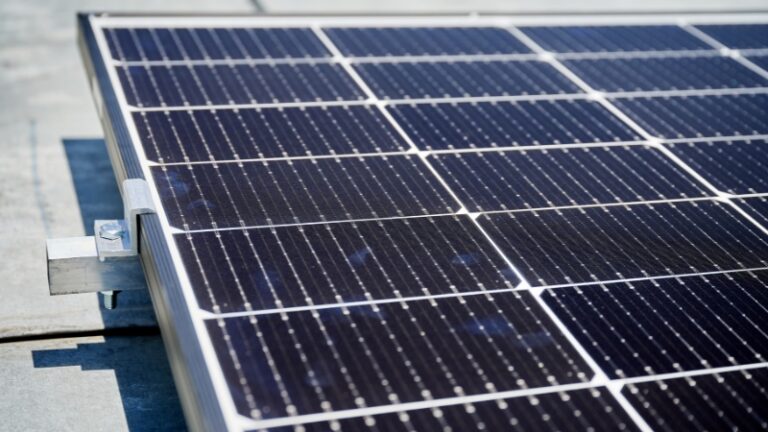
A 400-watt solar panel represents one of the most efficient residential solar module classes widely available today. It delivers high power density in a single unit, reduces roof space requirements, and lowers balance-of-system costs compared to older 250W–330W modules.
In practical terms, a modern 400W photovoltaic module can generate around 1.6 to 2.5 kilowatt-hours per day, depending on location. Over a 25–30-year lifespan, that translates into tens of thousands of kilowatt-hours of electricity production.
When properly installed, these panels require minimal maintenance and offer predictable long-term performance backed by 25-year warranties.
What Is a 400 Watt Solar Panel Made Of?
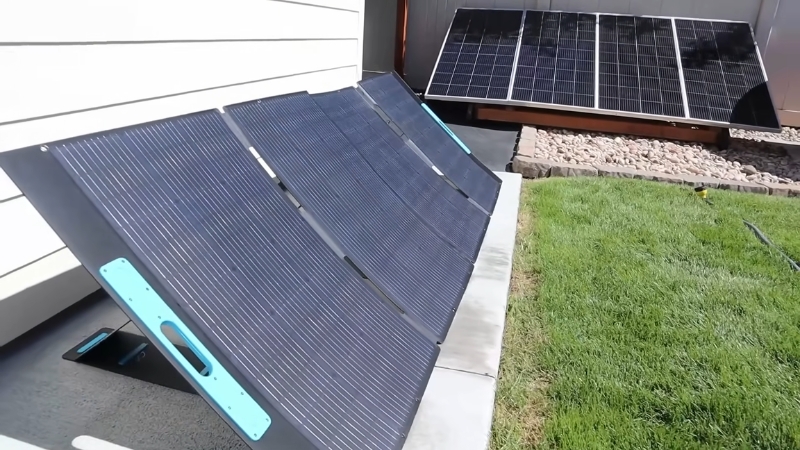
A solar panel converts sunlight into electricity using the photovoltaic effect. The fundamental active material is crystalline silicon, which generates electrical current when exposed to photons.
A typical 400W panel contains the following core components:
Component
Function
Material Type
Solar Cells
Convert sunlight into electricity
Monocrystalline silicon
Encapsulant
Protects cells from moisture and vibration
EVA polymer
Front Glass
Protects the panel and allows light transmission
Tempered low-iron glass
Back Sheet
Electrical insulation and weather protection
Polymer laminate
Aluminum Frame
Structural rigidity and mounting support
Anodized aluminum
Junction Box
Electrical output interface
IP67/IP68 rated enclosure
Conductors
Carry current between cells
Silver and copper
This structure explains why solar panels have no moving parts and extremely low failure rates. The glass and aluminum frame protect the fragile silicon wafers, while encapsulation prevents moisture intrusion.
Since there are no mechanical components, degradation is mostly chemical and thermal rather than mechanical. That is why most manufacturers confidently offer 25-year performance warranties.
The Science Behind Solar Panels
In 1905, Einstein published a paper explaining the photoelectric effect using quantized light—essentially laying the groundwork for quantum theory. But he didn’t follow that path further. Instead, it was Max Planck and later Niels Bohr who developed it. Einstein was famously… pic.twitter.com/MGY4pqY7bg
— Physics In History (@PhysInHistory) April 6, 2025
The photovoltaic effect was formally explained by Albert Einstein in 1905 when he described the photoelectric effect. Photons from sunlight strike silicon atoms, displacing electrons and creating an electric current.
Modern panels achieve efficiencies between 19% and 22%, meaning they convert roughly one-fifth of incoming solar energy into usable electricity.
The efficiency equation is:
Efficiency = Electrical Output ÷ Solar Irradiance Input
Under standard test conditions (STC), irradiance is defined as 1000 W/m² at 25°C cell temperature.
Power Output of a 400W Solar Panel
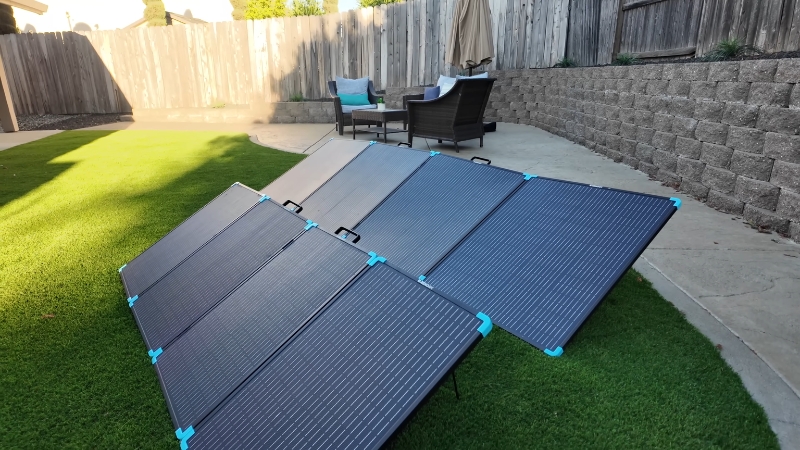
The rated power of 400 watts represents the maximum output under STC conditions.
Power is calculated as:
P = Voltage × Current
Most 400W panels operate near:
Electrical Parameter
Typical Value
Voltage (Vmpp)
38–42 V
Current (Impp)
9.5–10.5 A
Maximum Power
400 W
These values demonstrate that 400W panels achieve high output by optimizing both voltage and current. Higher voltage improves system design flexibility, especially in grid-tied installations.
However, real-world output rarely matches STC values because outdoor conditions differ from laboratory conditions.
Real-World Energy Production
Energy production depends on location and peak sun hours. Energy is calculated as:
Energy (kWh) = Power (kW) × Time (hours)
Below is the estimated daily production for a single 400W panel in different climates:
Location
Average Peak Sun Hours
Daily Production
Annual Production
Los Angeles, CA
5.0–5.5
2.0–2.2 kWh
~730 kWh
Texas
4.5–5.5
1.8–2.2 kWh
~650–750 kWh
Florida
4.5–5.5
1.8–2.2 kWh
~650–750 kWh
UK
2.5–3.5
1.0–1.4 kWh
~365–500 kWh
Germany
2.8–3.5
1.1–1.4 kWh
~400–500 kWh
Location has the largest impact on energy yield. A 400W panel in California can produce nearly double the energy of the same panel in Northern Europe.
This explains why solar system sizing must always account for regional irradiance rather than relying solely on panel wattage.
How Many 400W Panels Does a Home Need?
View this post on Instagram
The average U.S. household consumes approximately 890 kWh per month (about 10,700 kWh per year).
If a 400W panel produces 730 kWh annually in a sunny state:
10,700 ÷ 730 ≈ 14.6 panels
Rounded up, 15 panels are required.
Monthly Consumption
Annual Need
Panels Required (Sunny Region)
600 kWh
7,200 kWh
10 panels
890 kWh
10,700 kWh
15 panels
1,200 kWh
14,400 kWh
20 panels
This shows that panel count scales linearly with electricity usage. Higher efficiency panels reduce the roof footprint compared to lower wattage panels. Using 400W modules instead of 300W modules can reduce the required panel count by roughly 25 percent.
Roof Space Requirements
A typical 400W panel measures about 79 inches by 39 inches, roughly 20.8 square feet.
Number of Panels
Roof Area Required
10
~208 sq ft
14
~291 sq ft
20
~416 sq ft
Roof availability often determines system size. Higher wattage panels reduce spatial constraints, especially on smaller residential rooftops. Fewer panels also reduce mounting hardware and wiring complexity.
Cost of a 400 Watt Solar Panel
Retail pricing ranges between $300 and $400 per panel, depending on brand and efficiency class.
Assuming $350 per panel and 730 kWh annual output:
If electricity costs $0.25 per kWh:
730 × $0.25 = $182.50 annual savings
Electricity Rate
Annual Savings
$0.15/kWh
$109
$0.20/kWh
$146
$0.25/kWh
$182
$0.30/kWh
$219
The higher the local electricity rates are, the faster the payback occurs. In high-cost states like California or parts of Europe, payback periods can fall below 3 years when incentives are applied.
Pairing with Batteries
A 400W panel typically produces 2 kWh per day in sunny climates. A 1 kWh lithium battery is commonly paired for partial storage.
Battery Type
Charge Time
Efficiency
Lifespan
Lithium
2–4 hours
90–95%
10–15 years
Lead-Acid
8–12 hours
70–85%
3–7 years
Lithium batteries outperform lead-acid across efficiency, cycle life, and charge speed. Although initial costs are higher, lifecycle economics favor lithium in nearly all residential solar systems.
Key Technical Specifications Explained
Specification
Meaning
Importance
Pmax
Maximum rated output
Defines system capacity
Vmpp
Voltage at max power
Affects string design
Impp
Current at max power
Determines wiring requirements
Temperature Coefficient
Output loss per °C increase
Critical for hot climates
Efficiency
Conversion rate
Determines the area needed
Warranty
Performance guarantee
Indicates durability
The temperature coefficient is particularly important. Many 400W panels have coefficients near -0.35%/°C. If the panel temperature rises 30°C above 25°C, output can drop by over 10%. Proper airflow and mounting elevation mitigate this loss.
What Can a 400W Panel Power?
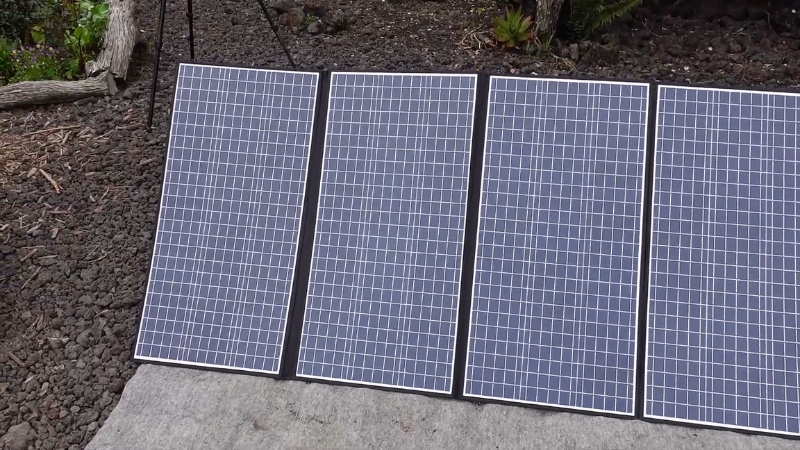
In optimal conditions, one 400W panel can generate enough daily energy to run:
- A refrigerator (1–1.5 kWh/day)
- LED lighting
- Laptop charging
- Television usage
- Small fans
However, continuous high-load appliances require either multiple panels or battery storage.
Off-Grid 400W Solar Kit Components
Component
Purpose
400W Panel
Energy production
MPPT Charge Controller
Optimizes voltage and current
1 kWh Lithium Battery
Energy storage
2 kW Pure Sine Inverter
Converts DC to AC
An MPPT charge controller improves energy harvest by up to 30% compared to PWM controllers. A 2kW inverter ensures that short bursts of high appliance startup loads are supported.
Maintenance and Lifespan
Solar panels require minimal maintenance:
- Monthly light cleaning with water
- Periodic inspection of mounting rails
- Occasional inverter checks
Most 400W panels carry 25-year performance warranties guaranteeing 80–85% output after 25 years.
Annual degradation rates typically range between 0.3% and 0.5%.
Final Assessment
@solar1tok What’s the best 400w solar panel? #solar #solarsystem #solarpower #offgrid #diy ♬ original sound – Solartok
A 400-watt solar panel offers high efficiency, strong energy density, and long-term durability suitable for residential, RV, marine, and small off-grid systems. It reduces roof space requirements while delivering predictable energy generation for decades.
With proper installation, cooling airflow, lithium storage pairing, and routine cleaning, a 400W panel can operate reliably for 25 to 30 years while generating substantial long-term savings.
In today’s residential solar market, the 400-watt class represents a practical balance between efficiency, size, cost, and durability.