
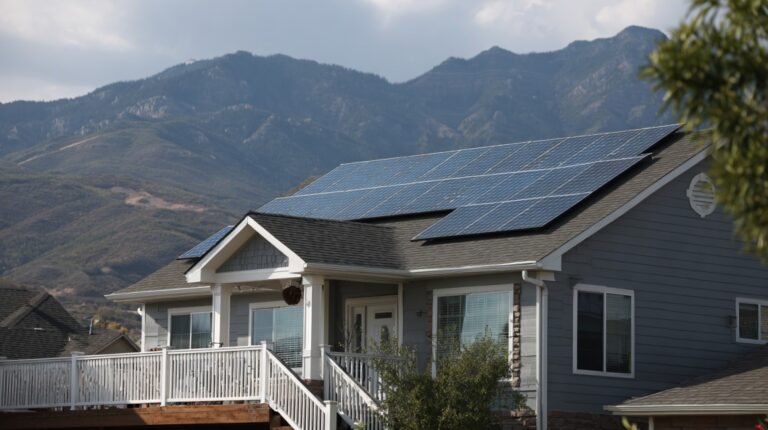
Residential solar adoption continues to expand as utility rates rise and more homeowners seek clean, renewable energy solutions. Generating electricity at home can significantly reduce monthly power bills while lowering reliance on traditional grid energy.
For many households, solar panels represent both a financial investment and a long-term energy decision. A central question in solar financing is deciding between buying and leasing a home solar system.
Careful evaluation of these factors helps homeowners choose the option that aligns with their financial goals, homeownership plans, and comfort level with equipment ownership.
Clear knowledge of upfront costs, tax incentives, maintenance obligations, and resale impact allows homeowners to make informed decisions about installing solar panels.
Financial Comparison
| Category | Buying | Leasing |
|---|---|---|
| Upfront Cost | High initial cost, about $30,000 before incentives. | Little or no upfront cost. Often zero down. |
| Long Term Savings | Highest savings over 25 to 30 years, especially after payoff. | Lower lifetime savings due to 1% to 3% annual escalators. |
| Tax Credits | Eligible for federal and possible state or local incentives. | Incentives go to the provider. |
| Maintenance | Owner handles maintenance outside of warranties. | Provider handles monitoring and repairs. |
| Home Value | May increase resale value. | May complicate resale due to lease transfer or buyout. |
| Control and Equity | Full ownership and upgrade flexibility. | No ownership equity and limited modification rights. |
Careful cost analysis plays a central role in deciding between buying and leasing solar panels. Short term affordability and long term savings can differ significantly depending on financing structure, contract terms, and available incentives.
@versofy.com Let’s explore which one is better between ‘Rent To Own’ and ‘Solar As A Service’. #solar #service #renewableenergy #gosolar #versofy #electricity #savemoney ♬ original sound – Versofy
Upfront Costs
Buying a home solar system requires a substantial initial investment. Average installation costs are approximately $30,000 before incentives. Actual pricing depends on system size, equipment quality, roof condition, and geographic location.
- System capacity measured in kilowatts, which determines how much electricity can be produced
- Panel and inverter brand selection, which affects efficiency and durability
- Labor rates and permitting requirements in the local market
- Optional additions such as battery storage
Federal and local incentives can reduce net cost after installation, but full payment or loan approval is typically required at the start.
Leasing usually involves little or no upfront payment. Many providers advertise zero-down installation, removing a major financial barrier. Instead of paying for equipment, homeowners commit to predictable monthly payments under a lease or Power Purchase Agreement.
Lower entry cost allows households with limited savings or borrowing capacity to access solar energy without large initial expense.
Long-Term Savings and Costs
Long term financial performance often determines which option makes better sense for a homeowner’s goals. Ownership generally delivers the highest lifetime savings.
Once the home solar system is paid off, electricity generated for the remaining portion of its 25-plus-year lifespan can substantially reduce or even eliminate electric bills.

- Fixed loan payments if financing is used
- Long term energy production that offsets rising utility rates
- Full benefit of bill reductions after loan payoff
Interest on solar loans reduces total savings but still results in asset ownership and potential equity. Over decades, cumulative bill reductions can exceed initial installation costs.
Leasing can also reduce monthly electricity expenses, particularly in areas with high utility rates. Lease agreements often guarantee that monthly payments start below current utility bills. However, many contracts include annual escalator clauses of 1% to 3%.
Payment increases over time narrow the gap between lease costs and utility rates, reducing total savings compared to ownership.
- Local electricity prices and projected rate increases
- System production levels based on climate and roof orientation
- Contract length, escalator percentage, and buyout terms
- Availability of net metering policies
Careful review of projected savings under realistic rate assumptions helps prevent unexpected financial outcomes.
Incentives and Tax Credits
Government incentives can significantly influence overall home solar system cost.
Ownership qualifies homeowners for the federal solar tax credit, subject to eligibility rules and timing requirements.
Many states, municipalities, and utilities also offer rebates or performance-based incentives.
- The federal solar tax credit applied to the installation cost
- State tax credits in qualifying regions
- Utility rebates or performance payments
Leasing arrangements transfer all tax credits and rebates to the solar provider because it owns the equipment. Homeowners do not directly claim these incentives. Some companies adjust lease pricing to account for incentive value, but financial benefit remains indirect.
Access to incentives can substantially reduce net purchase cost, improving return on investment and shortening payback period.
How Solar Financing Works
Solar financing structures determine who owns the system, who claims incentives, and who carries long-term responsibility.
Buying (Ownership)
Buying a home solar system means the homeowner purchases equipment outright using cash or a solar loan.
Legal ownership transfers immediately after installation and payment terms are finalized.
Control over equipment decisions allows homeowners to adapt their system as energy needs change.
Performance monitoring and warranty management remain the owner’s responsibility, but decision-making authority stays fully in their hands.
Loan financing spreads the cost over time while preserving ownership status. Monthly loan payments may replace or reduce utility bills, gradually building equity in the system.
Leasing (Third Party Ownership)
Leasing involves a solar company installing panels on a homeowner’s property while retaining ownership.
Homeowners pay either a fixed monthly lease amount or a rate per kilowatt hour produced under a Power Purchase Agreement.
- Contract terms typically last 10 to 25 years
- Little or no upfront installation cost
- Annual escalator clauses of 1% to 3% are in many contracts
Equipment ownership remains with the provider for the full contract period. Tax credits and rebates go directly to the company.
Maintenance, home solar system monitoring, and most repairs are included under contract terms, reducing operational responsibility for the homeowner.
Contract review remains critical, since early termination fees, buyout options, and transfer requirements can affect long-term flexibility.
Ownership and Responsibility
Responsibility for system performance and upkeep differs significantly between buying and leasing. Clear expectations regarding maintenance, upgrades, and contractual obligations reduce potential surprises.
Maintenance and Repairs
Owning a solar system requires accepting responsibility for maintenance and repairs not covered by warranties. Manufacturer warranties often protect solar panels for 20 to 25 years. Inverters may carry shorter warranty periods, often 10 to 15 years.
Routine upkeep remains minimal in most regions, yet repair costs outside warranty coverage fall to the homeowner.
Leasing shifts maintenance responsibility to the provider. Monitoring systems track performance, and service teams handle equipment failures. Predictable monthly payments replace uncertainty regarding repair expenses.
Home Solar System Ownership
Ownership grants full authority over future equipment decisions. Homeowners can increase system size, integrate battery storage, or upgrade components as technology advances.
Leasing limits flexibility since the equipment belongs to the provider. Contract terms dictate what changes are allowed.
Early termination or major modifications may involve fees or require negotiation with the company.
Impact on Home Value and Sale
Solar installation can influence resale value and transaction complexity. Owned systems often provide a measurable financial benefit during a home sale.
Research indicates that homes equipped with owned solar panels may command higher sale prices. Prospective buyers often value lower electricity bills and existing renewable energy systems.
Leased systems do not typically add comparable value.
- Buyer qualification to assume the lease
- Transfer of contract terms to the new owner
- Buyout payment if the lease cannot be transferred
Lease transfer requirements can delay or complicate closing, particularly if buyers prefer full ownership of installed equipment.
Summary
Buying a solar system often delivers the strongest financial return and potential property value increase for homeowners who can afford the investment and plan to stay long term. Full ownership allows access to incentives and complete control over equipment decisions.
Leasing offers a lower barrier to entry with minimal upfront expense and included maintenance. Choice depends on personal finances, local incentive availability, contract terms, and preference for ownership versus convenience.