
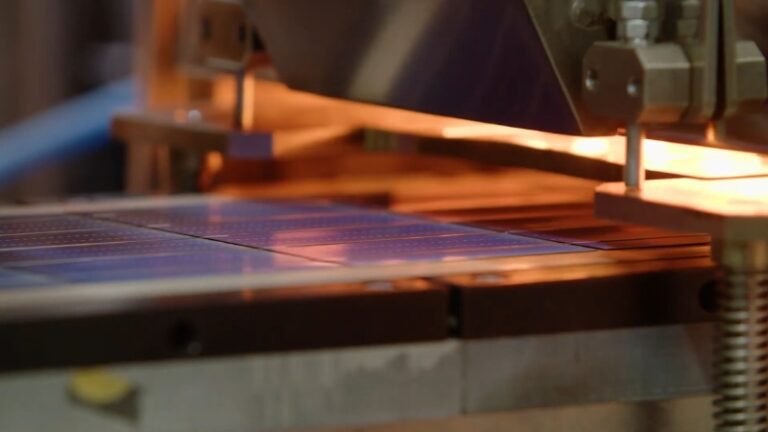
A handful of manufacturers now supply most of the world’s solar panels.
By the end of 2025, China’s module makers shipped ~536 GW of modules, and the four biggest suppliers, JinkoSolar, LONGi Green Energy, Trina Solar, and JA Solar, accounted for around 58 % of those shipments.
Global Solar Market Reality in 2026

The solar manufacturing sector experienced heavy price compression in 2024 and 2025. Module prices dropped sharply due to oversupply, forcing even the largest companies to report losses.
Despite this, shipment volumes continued to grow globally as demand for utility-scale solar, data center power, and grid-scale storage expanded.
The companies that survived this price war and still shipped tens of gigawatts annually are the true leaders entering 2026.
Estimated Global Shipment Tiers (2025)
Tier
Annual Module Shipments
Companies in Tier
80–100 GW
Market leaders
JinkoSolar, LONGi
60–70 GW
Upper-tier leaders
Trina Solar, JA Solar
20–40 GW
Large-scale producers
Tongwei Solar
15–25 GW
Global diversified players
First Solar, Canadian Solar
15–20 GW
Advanced tech challengers
Risen Energy
Shipment scale directly affects bankability. Large EPC contractors and developers prefer suppliers with long-term production capacity and financial stability.
1. JinkoSolar – The Global Volume Leader
JinkoSolar remains the largest solar module shipper in the world entering 2026. In the first three quarters of 2025, it shipped 61.9 GW of modules and guided full-year shipments between 85 and 100 GW. That makes it the undisputed volume leader.
In 2025, Jinko reported revenue of approximately RMB 65.49 billion, though net losses reached RMB 6.8 billion due to price declines across the industry.
Jinko’s competitive strength lies in:
- Advanced N-type TOPCon technology
- Tiger Neo 3 modules reaching up to 670W
- Global manufacturing presence in China, Malaysia, Vietnam, and the U.S.
- Heavy R&D spending
Over 60 percent of its 2026 shipments are expected to be high-power modules above 600W. That transition toward higher wattage and efficiency is critical in utility-scale deployment, where land and balance-of-system costs dominate.
2. LONGi Green Energy – Premium Efficiency Leader
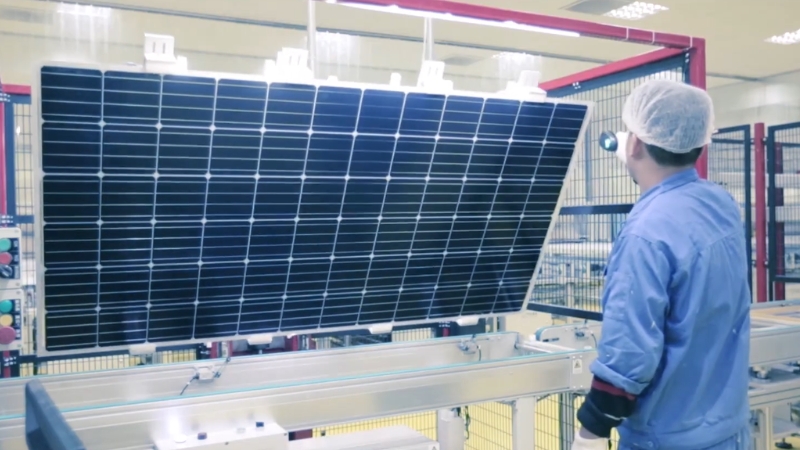
LONGi pioneered monocrystalline wafer dominance and is now leading the transition toward back-contact technology. In the first half of 2025, LONGi shipped 39.57 GW of modules and generated RMB 32.8 billion in revenue, though it recorded a RMB 2.5 billion loss.
LONGi’s positioning is different from Jinko’s. Instead of competing purely on volume, LONGi focuses on:
- High-efficiency back-contact modules
- Premium commercial and distributed generation markets
- U.S. manufacturing through Illuminate USA
- Vertical wafer-to-module integration
Back-contact modules improve light capture by relocating electrical contacts to the rear of the cell. This boosts performance and improves aesthetics for residential and commercial installations.
3. Trina Solar – Utility-Scale Specialist
View this post on Instagram
Trina Solar shipped over 32 GW in the first half of 2025 and is estimated to be in the 60–70 GW annual shipment range.
The company generated RMB 31 billion in H1 2025 revenue but posted a net loss of RMB 2.92 billion due to industry conditions.
Trina is best known for:
- 210 mm wafer format standardization
- Vertex high-power modules
- Strong utility-scale project presence
- Integration with tracking systems
Trina has built a strong position in large solar farms globally. Its module design often targets optimized balance-of-system economics rather than pure cell efficiency numbers.
4. JA Solar – R&D-Driven Export Leader
JA Solar shipped 79.447 GW in 2024, representing around 40 percent year-over-year growth. Roughly half of its shipments were exported, demonstrating strong international market penetration.
2024 revenue reached RMB 70.12 billion, though it posted a RMB 4.65 billion net loss due to module price declines.
JA Solar invested RMB 3.7 billion into research and development and holds nearly 1,900 patents.
Its strengths include:
- TOPCon N-type modules
- Back-contact product development
- Balanced global exposure
- Strong brand bankability
JA Solar consistently ranks high in reliability scorecards used by international developers.
5. Tongwei Solar – Vertical Integration Giant
@mf.solar1 Tongwei is the new future of Panels. Introducing the Tongwei TNC3.0 Quarter Cut Module. Every detail has been refined to deliver more efficiency up to 24.8%, more returns and more reliability. Try Tongwei for your next installation and add Tongwei to your stock if you are a seller. #tongwei #panel #solarsetup #solarsystem #solarcompany ♬ original sound – MF Solar
Tongwei is unique because it dominates upstream polysilicon production. In H1 2025, it produced 161,300 metric tons of polysilicon, representing roughly 30 percent of global supply.
Its module shipments reached 24.52 GW in the first half of 2025, a 31 percent increase year-over-year.
Revenue for H1 2025 was RMB 40.5 billion, but net losses totaled RMB 4.96 billion.
Tongwei’s competitive advantage is vertical integration. Controlling polysilicon, wafers, cells, and modules reduces dependency on suppliers and improves long-term cost control.
6. Canadian Solar – Diversified Global Player
Canadian Solar shipped 7.9 GW in Q2 2025 and 6.9 GW in Q1 2025. Quarterly revenue reached US $1.7 billion in Q2 and US $1.2 billion in Q1.
Unlike most top suppliers, Canadian Solar is headquartered in North America while operating manufacturing in China, Southeast Asia, and Brazil.
Its advantages include:
- Strong North American footprint
- Solar project development division
- Battery storage integration
- Geographic diversification
Canadian Solar remains profitable in more regions than many competitors due to its diversified revenue streams.
7. First Solar – Thin-Film Technology Leader
A bird’s eye view of this magnificent solar plant to start the week off on the right foot. Any guesses as to what this plant is called? pic.twitter.com/De3r2j5X1d
— First Solar (@FirstSolar) February 28, 2022
First Solar stands apart technologically. Instead of crystalline silicon, it manufactures cadmium-telluride thin-film modules.
In 2025, First Solar shipped 17.5 GW and generated US $5.2 billion in revenue. Its backlog stands at 50.1 G, W worth approximately US $15.1 billion.
Unlike many Chinese competitors, First Solar reported positive margins and strong contracted pipelines.
Key strengths include:
- U.S.-based manufacturing
- Inflation Reduction Act incentives
- High heat tolerance modules
- Lower carbon manufacturing footprint
Its thin-film modules perform well in hot desert climates and utility-scale installations.
8. Risen Energy – HJT Technology Challenger
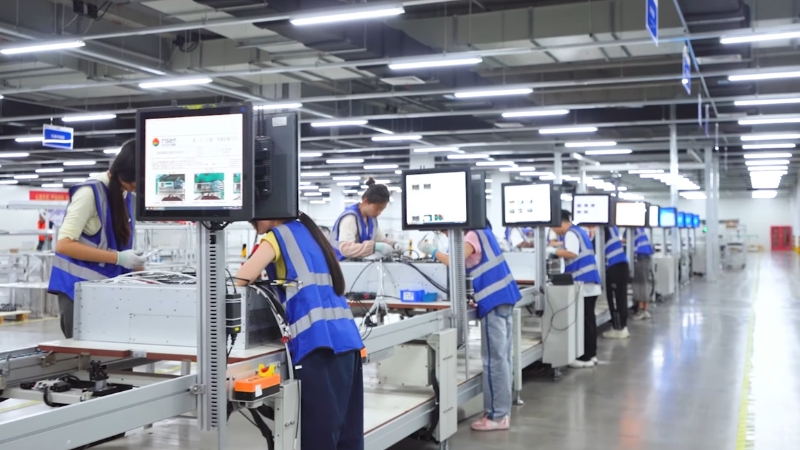
Risen Energy shipped 18.07 GW in 2024. Revenue was RMB 20.24 billion with a RMB 3.436 billion net loss.
Risen is one of the largest companies investing heavily in heterojunction (HJT) cell technology, which promises higher efficiency but currently has higher manufacturing costs.
Risen’s strategy is to differentiate technologically rather than compete solely on scale.
Technology Trends Defining the Best in 2026
The industry is transitioning rapidly from PERC to TOPCon and back-contact architectures.
Technology Adoption Snapshot (2025)
Technology
Approx. Share Among Top 10
TOPCon
~95% adoption
Back-Contact
Rapidly growing
HJT
Emerging premium segment
Thin-film CdTe
Dominated by First Solar
High-power modules above 600W are becoming standard in utility-scale projects. Efficiency records are pushing beyond 25 percent in laboratory conditions.
Final Assessment
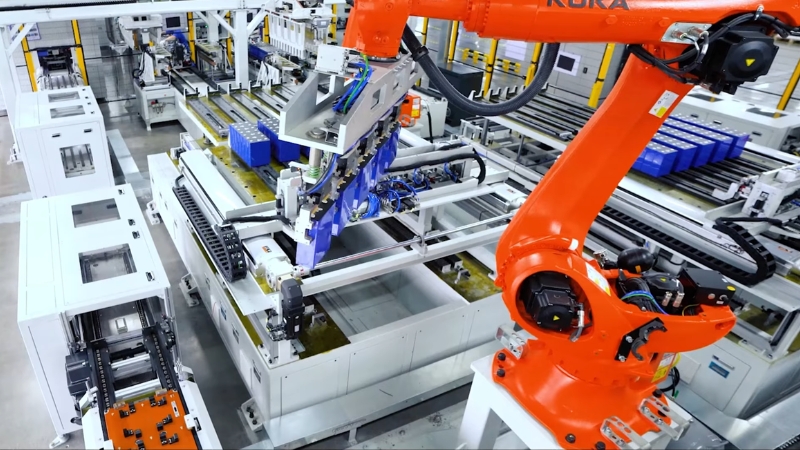
In 2026, the global solar panel industry will be controlled by a small group of ultra-scale manufacturers. JinkoSolar and LONGi Green Energy lead in volume. Trina Solar and JA Solar dominate upper-tier shipments.
Tongwei Solar controls upstream silicon. Canadian Solar and First Solar offer geographic diversification and strong bankability. Risen Energy represents advanced technology challengers.
The next cycle of solar growth will reward companies that combine advanced cell architecture, global manufacturing resilience, and disciplined cost control.