
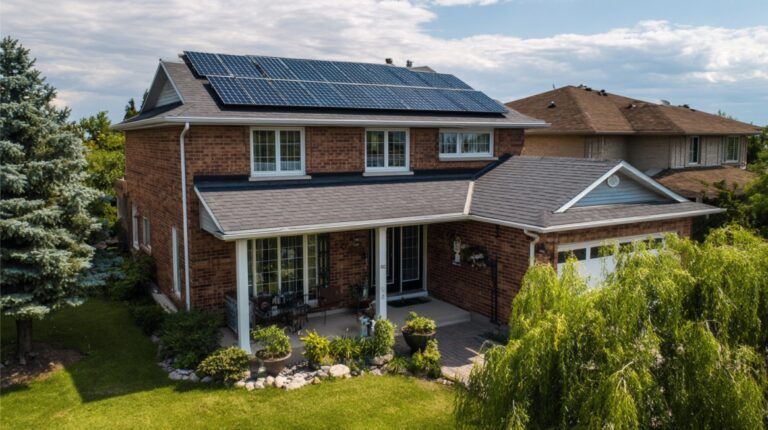
Many homeowners assume any roof works for solar panels. Reality shows several factors that determine how efficiently a solar system performs. Orientation, pitch, shading, roof condition, roof material, and available surface area all influence energy production.
Solar installations function best when panels receive steady sunlight during most of the day. Proper roof structure and layout also play a role in long-term performance and safety.
Good news exists for most homeowners. Many houses support solar systems with the correct design and mounting setup, even when roof conditions are not perfect.
A quick inspection using a few basic checks can reveal if a roof is ideal for solar, workable with adjustments, or in need of improvements before panel installation.
Check #1: Does Your Roof Face the Right Direction?
Roof direction plays a major role in rooftop solar performance. Solar panels generate electricity when sunlight hits the surface directly. Greater exposure to sunlight during the day usually leads to higher yearly energy production.
South-facing roof slopes receive the most consistent sunlight in the United States. Panels installed on these surfaces often reach the highest production levels during the year.
Several roof directions perform well for rooftop solar systems.
- South-facing roofs provide the highest sunlight exposure during the day.
- East-facing roofs receive strong sunlight during morning hours.
- West-facing roofs capture sunlight later in the day, supporting afternoon energy production.
Homes with east and west roof slopes can also support productive rooftop solar systems. Some installations divide panels across both sides of the roof.
Morning sunlight powers east-facing panels while afternoon sunlight powers west-facing panels, spreading electricity generation across the day.
North-facing roof slopes receive the least direct sunlight. Rooftop solar systems placed on north-facing surfaces usually generate less electricity compared with other orientations. Installers may still consider north-facing roofs in areas with high solar exposure or when other roof sections lack space.
Homeowners can perform a quick direction check using simple tools.
- A compass application on a smartphone
- Satellite imagery in Google Maps
- Roof slope direction visible in aerial images
Simple checks like these provide a quick first look at rooftop solar potential before a professional evaluation.
Check #2: Is Your Roof Angle (Pitch) Reasonable?

Roof pitch describes the steepness of the roof surface. Panel position relative to the sun affects how efficiently rooftop solar systems produce electricity.
Sunlight strikes solar panels most effectively when the panel tilt allows direct exposure during peak daylight hours. Roofs built with moderate slopes usually support efficient solar installations without additional adjustments.
Many residential systems perform best when the roof pitch falls between 18 and 34 degrees.
- Around 30° to 40° often delivers strong solar performance.
- Between 30° and 50° usually works very well for residential systems.
- Between 15° and 60° can still support effective solar panel installation with proper mounting systems.
Most residential homes already fall within a suitable pitch range. Standard roof designs used in many neighborhoods naturally support rooftop solar systems without major modifications.
Flat roofs can still support rooftop solar systems. Installers often place panels on tilted mounting frames. Angled frames position the panels toward the sun and help maintain strong electricity generation.
Proper panel tilt helps maximize yearly production and improves sunlight exposure during different seasons.
Check #3: How Much Shade Hits Your Roof?
Shading strongly influences rooftop solar energy production. Solar panels perform best when sunlight reaches them consistently during peak daylight hours.
Even small shadows can reduce panel output. Shade affecting a single panel can influence the performance of connected panels in the same electrical string.
Several common structures and obstacles create shade on rooftops.
- Trees
- Nearby buildings
- Chimneys
- Roof vents or dormers

Homeowners can perform a simple sunlight test to evaluate rooftop solar potential. Observing roof sunlight during different times of day provides useful insight into shading patterns.
Solar professionals often check sunlight exposure during the most productive hours of the day.
- Late morning hours around 10 a.m.
- Midday sunlight between late morning and early afternoon
- Early afternoon sunlight up to about 4 p.m.
Roof surfaces receiving direct sunlight during most of these hours usually provide strong rooftop solar performance. Large open roof areas without frequent shade allow panels to produce electricity more consistently.
Shade reduction through tree trimming or panel layout adjustments can sometimes improve solar production.
Check #4: Is Your Roof in Good Structural Condition?
View this post on Instagram
Rooftop solar systems remain installed for decades. Most solar panels operate for 25 to 35 years or longer, making roof condition an important factor before installation.
The roof structure beneath the solar system must remain stable for the entire lifespan of the panels. Older roofs or damaged roofing materials may require repair before solar installation begins.
Installers typically inspect several indicators to evaluate roof readiness for rooftop solar systems.
- No missing shingles
- No active roof leaks
- No sagging sections in the roof structure
- No major visible damage
Roof age also influences installation decisions. Roofs less than about 20 years old usually qualify as strong candidates for rooftop solar installation if the overall condition remains solid.
Solar panels add extra weight to the roof structure. Proper roof framing and stable roofing materials help support the system safely.
Installers often recommend roof replacement before solar installation if roofing materials may fail within the next decade. Installing solar panels on a new or recently replaced roof helps prevent future removal costs during roof repair.
Check #5: Do You Actually Have Enough Roof Space?
Roof space determines how many solar panels can be installed. Rooftop solar systems require clear roof sections large enough to support multiple panels.
Panel quantity directly affects electricity production. Larger systems usually produce more energy for household use.
Typical rooftop solar systems require specific roof space to operate effectively.
- Around 20 square meters of roof area for a typical 3.5 kW system
- Around 28 square meters for a system producing about 4 kW
Several roof features may reduce the amount of usable installation area.
- Skylights
- Chimneys
- Roof vents
- Complex roof shapes or intersecting slopes
Modern rooftop solar technology offers solutions for homes with limited roof space. High-efficiency monocrystalline solar panels generate more electricity using fewer panels.
Compact panel layouts allow installers to maximize production even on smaller roof surfaces. Clear sections of the roof without obstacles usually remain the best locations for solar panel placement.
Bonus Check: What Is Your Roof Made Of?
Roof material affects how easily rooftop solar panels can be installed. Mounting hardware must attach securely to the roof structure to support the system safely.
Several roofing materials work well with rooftop solar installations.
- Asphalt shingles
- Metal roofs
- Concrete roofs
- Fiberglass roofing materials
Installers usually mount solar panels quickly on these surfaces using standard mounting systems.
Some roofing materials require additional care during installation. Slate and tile roofs often demand specialized mounting hardware and careful handling to prevent breakage.
Extra labor during installation may increase the overall project cost for these materials. Professional installers evaluate roofing materials carefully before rooftop solar installation to ensure safe mounting and long-term durability.

The Fastest Way to Know for Sure
- Good sunlight exposure
- South, east, or west-facing roof direction
- Roof pitch around 30 to 40 degrees
- Minimal shading
- Adequate roof space for panels
- Strong roof structure in good condition
Most homes can support solar panel systems even when the roof characteristics are not perfect.
Professional solar site assessments provide the most accurate answer. Installers evaluate roof structure, shading patterns, and energy production potential to determine ideal system design.