
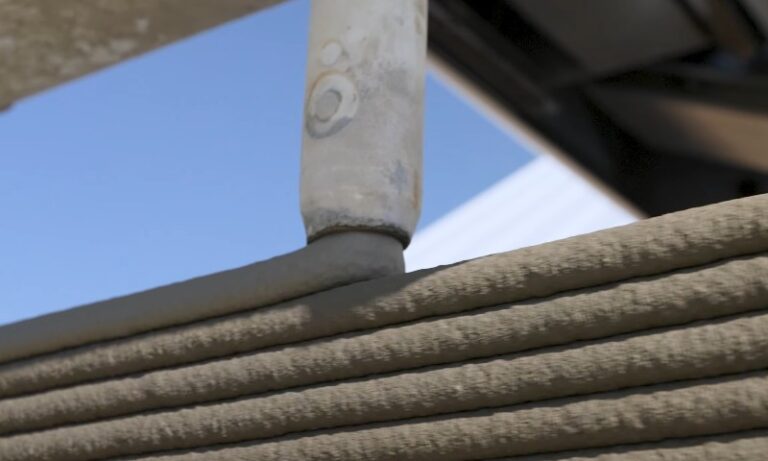
Low-carbon concrete matters in 2026 because builders can no longer treat cement emissions as a distant sustainability footnote. Cement binds concrete together, yet its production is one of construction’s dirtiest steps.
Chatham House has estimated that cement accounts for around 8% of global CO2 emissions, while UNEP says buildings and construction represent 37% of global emissions when operations and materials are counted together.
Concrete will remain central to housing, bridges, data centers, ports, roads, schools, and water systems. The real change is in the binder.
In 2026, cement alternatives are no longer confined to laboratory papers or small green-building showcases. They are entering public procurement rules, federal project requirements, airport work, warehouses, residential pours, and commercial supply agreements.
Why Ordinary Cement Carries Such A Heavy Footprint
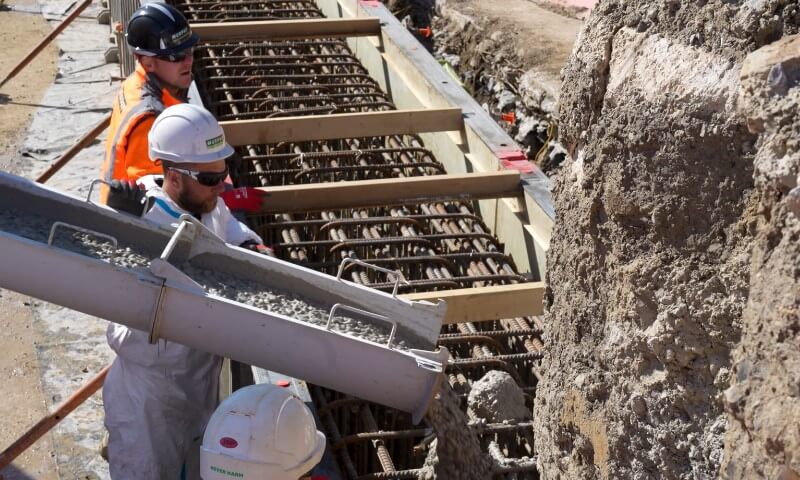
Concrete is made from aggregate, water, and cement. The cement portion is small by volume, yet it carries most of the carbon burden.
That is also why material strategy now starts earlier in the design process. A builder comparing concrete-heavy assemblies with steel-based home systems from providers such as Elythera investments is already making carbon, speed, and structural decisions before the first mix is ordered.
Portland cement depends on clinker, a hard intermediate material made by heating limestone and other raw materials in kilns at very high temperatures.
Emissions come from fuel burned for heat and from the chemical release of CO2 when limestone is converted. That second part is why cement is hard to clean up with renewable electricity alone.
The International Energy Agency says the direct CO2 emissions intensity of cement production has been broadly flat in recent years, while annual intensity declines of 4% through 2030 are needed for alignment with its net-zero pathway.
That gap explains the rush toward alternative binders, blended cements, carbon mineralization, and new production chemistry.
What “Low-Carbon Concrete” Usually Means
Low-carbon concrete rarely means one single material. Most projects lower emissions through a mix design that uses less clinker, replaces part of cement with other binders, or locks CO2 into the finished material.
Common routes include:
| Approach | How It Cuts Carbon | 2026 Construction Relevance |
| Portland-limestone cement | Replaces part of clinker with ground limestone | Already accepted in many U.S. road and building specs |
| Fly ash and slag blends | Use industrial byproducts as supplementary cementitious materials | Mature, but supply depends on coal and steel markets |
| Limestone calcined clay cement | Combines calcined clay and limestone to cut clinker demand | Growing interest due to wide clay availability |
| CO2 mineralization | Injects or cures CO2 into concrete so it becomes a stable mineral | Useful for ready-mix producers with compatible equipment |
| Cement-free binders | Replace Portland cement with activated rocks or industrial byproducts | Early commercial projects, still scaling |
| New cement chemistry | Uses non-carbonate feedstocks or electrochemical production | Promising, but plant scale-up remains a hurdle |
MIT’s climate explainer notes that blended cements and supplementary cementitious materials can lower concrete emissions, while net-zero concrete will likely need more ambitious measures, including carbon capture and mineralization.
Portland-Limestone Cement Has Become The Practical First Step
View this post on Instagram
The easiest shift for many contractors is Portland-limestone cement, often called PLC or Type IL cement. It keeps familiar handling and performance expectations while using more limestone and less clinker than ordinary Portland cement.
That matters because contractors dislike risk. A bridge deck, school foundation, or hospital slab cannot become a chemistry experiment on pour day. PLC gives ready-mix suppliers a lower-carbon option that can often fit into existing specifications, batching practices, and quality-control routines.
Portland Cement Association-linked industry guidance and standards identify Type IL as cement with more than 5% and up to 15% limestone by mass. Industry materials commonly describe its emissions benefit at about 10% compared with ordinary Portland cement when used as a direct replacement.
A 10% cut may sound modest, but construction works at enormous volume. A routine specification change across roads, schools, warehouses, and apartments can avoid far more emissions than a handful of boutique pilot projects.
LC3 And Calcined Clay Are Drawing Serious Attention
Limestone calcined clay cement, usually shortened to LC3, is one of the most watched cement alternatives in 2026. It uses calcined clay and limestone to replace a large share of clinker.
The American Council for an Energy-Efficient Economy says LC3 can reduce carbon intensity by up to 40% under current technology conditions and may cost up to 25% less to produce because it uses less energy and lower-cost raw material.
ACEEE also notes that 46% of cement bought in the United States goes into public construction, giving government buyers major influence over market adoption.
Calcined clay has another advantage: geography. Fly ash depends on coal power, and high-quality slag depends on iron and steel output. Clay is more widely available. That makes LC3 especially appealing for regions where conventional supplementary cementitious materials are scarce or declining.
The catch is early-age strength, local supply, contractor familiarity, and code pathways. ACEEE points out that higher replacement rates still need more study in some applications, and that ready-mix operators need guidance before broad adoption becomes routine.
Procurement Rules Are Pulling The Market Forward
Low-carbon concrete adoption used to rely heavily on owners willing to pay extra for green credentials. In 2026, procurement rules are becoming a stronger driver.
The U.S. General Services Administration’s Inflation Reduction Act low-embodied-carbon material requirements set global warming potential limits for concrete by strength class. For example, the GSA lists limits for 3000 PSI, 4000 PSI, 5000 PSI, and higher-strength mixes, and requires product-specific Type III Environmental Product Declarations for qualifying materials.
That paperwork matters. Environmental Product Declarations, or EPDs, give owners and project teams a way to compare mixes using declared carbon data. A contractor bidding on a federal building, courthouse renovation, or land port of entry may now need proof that a concrete mix falls below a defined carbon threshold.
The market signal is blunt: document lower carbon or risk losing work.
New Binders Are Leaving The Lab
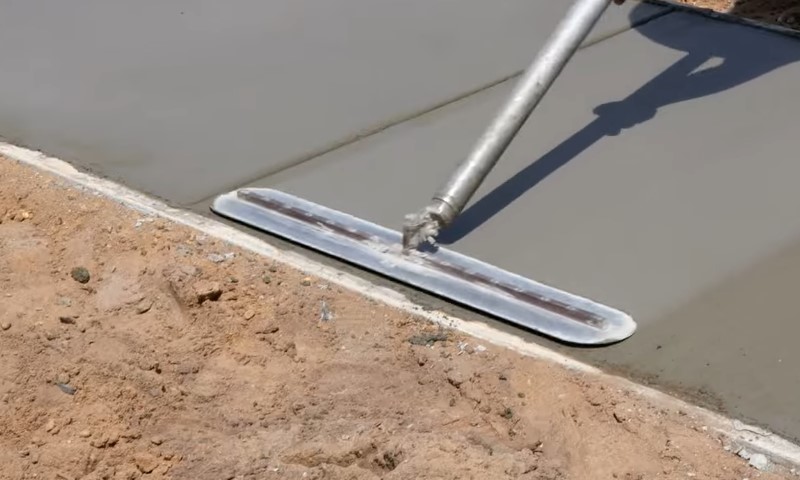
A second wave of low-carbon concrete goes beyond swapping clinker. Several companies are trying to replace Portland cement chemistry more deeply.
The U.S. Department of Energy has listed cement and concrete demonstration projects involving calcined clay, calcium-silicate feedstocks, electrochemical cement production, and carbon capture.
One project led by Sublime Systems aims to produce industry-standard cement electrochemically instead of using high heat and limestone. Another led by Brimstone plans a commercial-scale demonstration plant using calcium silicate rocks and alternative production methods, with projected annual avoidance of more than 77,000 metric tons of CO2.
Cement-free concrete has also moved into visible construction settings. C-Crete lists projects including a cement-free residential complex in Petaluma in January 2026, a granite-based data center project in Seattle in December 2025, and a Costco warehouse facility in 2025.
Company project pages are not neutral research sources, but they show where early commercial pours are happening and how quickly demonstration work is spreading beyond university labs.
Carbon Mineralization Adds Another Route
Carbon mineralization takes captured CO2 and turns it into stable carbonate minerals inside concrete or concrete ingredients. In ready-mix production, injected CO2 can react with cement chemistry and become locked into the material.
MIT’s climate portal describes mineralization as a way to chemically transform captured CO2 into part of the finished concrete rather than simply storing it underground.
MIT researchers also reported in December 2025 that cement in U.S. buildings and infrastructure naturally stores more than 6.5 million metric tons of CO2 annually through carbonation, equal to roughly 13% of U.S. cement manufacturing process emissions.
Natural carbonation does not erase cement’s footprint. It does, however, show why carbon accounting for concrete is getting more detailed. Future low-carbon design may consider mix chemistry, curing, surface exposure, lifespan, and end-of-life crushing more carefully.
What Builders Need To Watch Before Specifying Alternatives
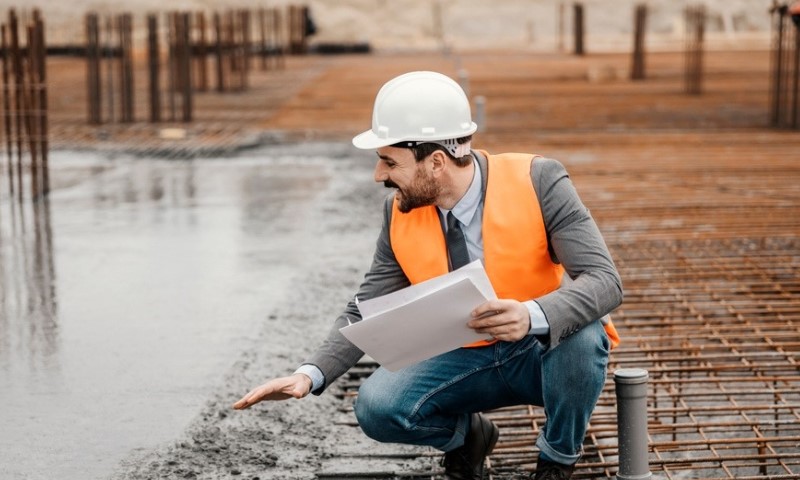
Low-carbon concrete is practical, but careless substitution can cause problems. Engineers and contractors need performance-based thinking, not label-based thinking.
Key checks include:
- Required compressive strength at 7, 28, and 56 days
- Exposure class, freeze-thaw risk, chloride exposure, and sulfate conditions
- Finishing behavior and set time in local weather
- Pumpability and placement requirements
- Availability of local batch plants and backup suppliers
- EPD data tied to the exact mix, plant, and material source
A mix that performs well for a warehouse slab may not suit a marine pier. A lower-carbon cement that works in warm weather may need admixture changes during a cold pour. Supply can also vary by region, especially for slag, fly ash, calcined clay, and newer binders.
How Cement Alternatives Are Changing Construction In 2026
The biggest change is cultural. Owners are starting to ask for carbon data early. Architects and engineers are writing embodied-carbon targets into specifications. Ready-mix producers are learning how to offer several carbon tiers instead of one default mix. Public buyers are helping create demand before every private developer is ready.
The International Energy Agency notes that demand commitments, public procurement, advance purchase agreements, and revised codes can help scale low-emissions cement and concrete markets.
More than 40 organizations have made commitments through initiatives such as ConcreteZero, the First Movers Coalition, and the Industrial Deep Decarbonisation Initiative.
For builders, the practical lesson is simple: lower-carbon concrete is becoming a normal procurement question. Price, strength, schedule, and durability still lead the conversation, but embodied carbon is moving onto the same spreadsheet.
Summary
Low-carbon concrete in 2026 is not a single product replacing every bag of Portland cement. It is a growing toolkit: PLC for fast adoption, LC3 for deeper clinker cuts, mineralization for carbon storage, and new binders for longer-term transformation.
The winners will be materials that meet codes, arrive on time, prove performance, and publish credible carbon data. Construction changes slowly, but cement alternatives are now changing how projects are specified, bid, mixed, and measured.