
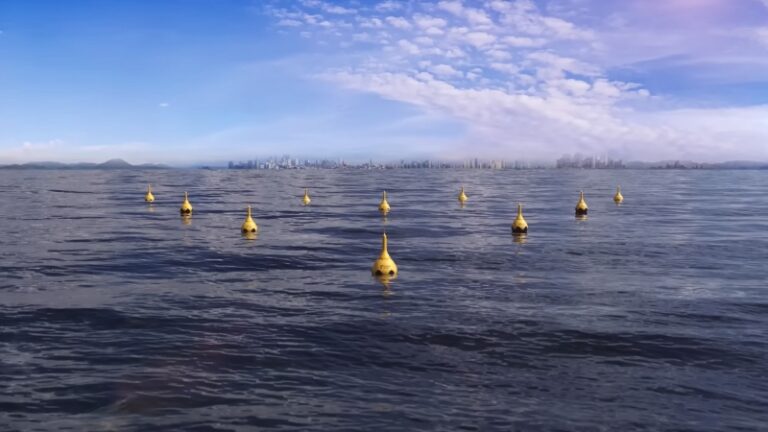
Wave energy converters are engineered systems that capture the mechanical energy contained in ocean surface waves and convert it into usable electrical power through a sequence of mechanical, hydraulic, and electrical processes.
In practical terms, they extract energy from the vertical and horizontal motion of waves, transfer that motion through a power take-off system, and drive an electrical generator connected to the grid or to local loads.
The technology is technically proven at pilot and demonstration scale, with multiple device families operating in real sea conditions, but it remains at an earlier commercial stage compared to wind or solar due to cost, survivability, and infrastructure challenges.
The Physical Basis of Wave Energy
Ocean waves are a secondary form of solar energy. Wind transfers momentum to the ocean surface over long distances, creating organized wave systems that can travel thousands of kilometers with limited energy loss. This allows wave energy to be both concentrated and predictable.
Power density is commonly measured in kilowatts per meter of wave crest, and strong coastal regions consistently register annual averages between 30 and 70 kW per meter, with winter peaks exceeding 100 kW per meter in parts of the North Atlantic and Southern Ocean.
This concentration matters. A single square meter of energetic wave front can carry more usable energy than an equivalent area of wind-swept land or solar-irradiated surface.
Additionally, wave patterns can be forecast several days in advance with high accuracy using meteorological models, making wave energy one of the most predictable variable renewable resources available.
Core Families of Wave Energy Converters
Wave energy converters are categorized by how they physically interact with waves, where they are deployed, and how they extract energy from motion. Each category represents a distinct engineering philosophy rather than incremental design variation.
Point Absorbers
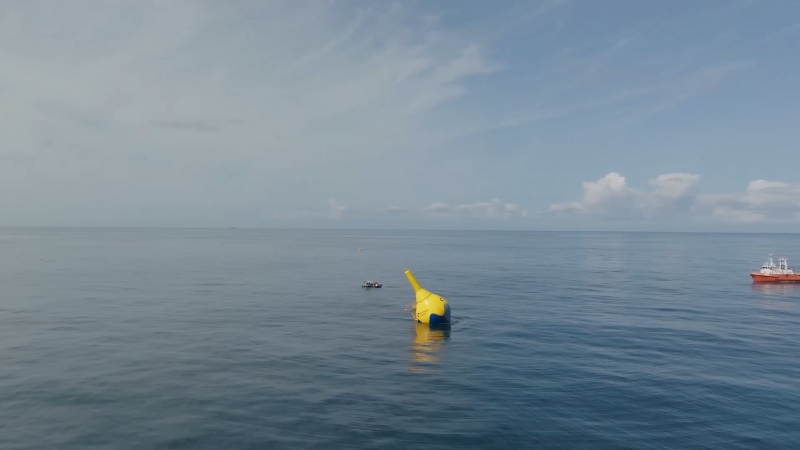
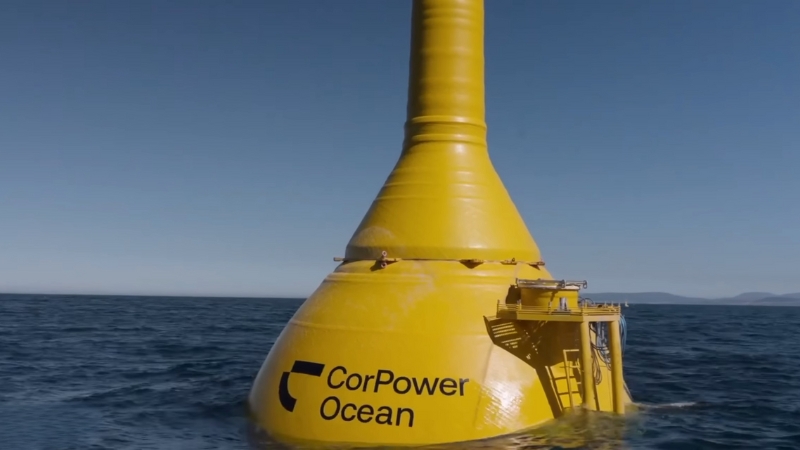
Point absorbers are compact floating or semi-submerged devices that extract energy primarily from vertical wave motion. As waves pass, the device moves up and down relative to a fixed reference such as a seabed anchor or submerged reaction plate.
This relative motion drives a mechanical or electrical system. Because point absorbers respond to waves from all directions, they are suitable for offshore environments with multidirectional swell.
Their modularity allows arrays to be deployed incrementally, though each unit typically produces limited power.
Attenuators
View this post on Instagram
Attenuators are elongated floating structures composed of multiple articulated segments aligned parallel to the direction of wave travel. Incoming waves cause the segments to flex relative to one another, and this bending motion is converted into energy.
Attenuators can intercept a broader wave front than point absorbers, enabling higher individual unit output. However, their length and mechanical complexity introduce higher structural loads and maintenance requirements.
Oscillating Water Columns
Oscillating water column systems consist of a hollow chamber open to the sea below the waterline. Wave motion causes the internal water column to rise and fall, compressing and decompressing air trapped above it. This airflow passes through a turbine connected to a generator.
Because air turbines can rotate in a single direction despite bidirectional airflow, the system remains mechanically simple. These devices are commonly integrated into coastal infrastructure such as breakwaters or cliffs.
Overtopping Devices
Overtopping devices capture wave energy by allowing waves to spill into an elevated reservoir. Water stored above sea level is then released through low-head turbines.
This approach resembles conventional hydropower and benefits from mature turbine technology, but it requires large structures and high wave energy to be viable.
Wave Energy Converter Technology Comparison
Technology Type
Deployment Zone
Energy Capture Method
Structural Scale
Typical Unit Output
Point absorber
Offshore
Vertical heave
Small to medium
50–500 kW
Attenuator
Offshore
Segment flexing
Large
500 kW–1 MW
Oscillating water column
Nearshore or onshore
Air compression
Medium
100–500 kW
Overtopping device
Nearshore
Potential energy
Very large
500 kW–2 MW
Step-by-Step Energy Conversion Process
The energy conversion process inside a wave energy converter follows a clear mechanical and electrical chain, regardless of device type.
First, wave motion induces movement in the primary structure. This movement can be linear, rotational, oscillatory, or pressure-based. The design objective is to maximize useful motion while limiting destructive loads during extreme sea states.
Second, the induced motion is transferred to a power take-off system. Hydraulic power take-off systems dominate early designs. Wave motion pressurizes hydraulic fluid, which is smoothed through accumulators to provide steadier rotational input to a generator.
More recent designs increasingly favor direct drive systems, where linear motion directly induces electrical current through electromagnetic generators. These reduce mechanical complexity but require advanced control electronics.
Third, electrical output is conditioned. Raw electricity generated from wave motion is irregular in both frequency and voltage.
Power electronics convert this output into a stable alternating current suitable for grid connection. Offshore devices transmit power via subsea cables, while isolated systems may store energy in batteries or feed microgrids.
Control Systems and Survivability Engineering
One of the defining challenges of wave energy is the same factor that makes it attractive: variability. Effective devices must actively adapt to changing wave conditions.
Modern systems use real-time control algorithms to tune damping, phase alignment, and generator resistance to maximize energy capture under normal conditions.
During extreme storms, control priorities shift from energy production to survival. Devices may lock into safe positions, submerge below destructive wave zones, or disconnect power take-off systems entirely.
Survivability engineering is a major cost driver and a central reason wave energy development has progressed more slowly than wind power.
Efficiency Metrics and Real World Performance
Efficiency in wave energy is measured using the capture width ratio, which compares how much wave energy a device captures relative to the wave front it occupies. Well-tuned devices in optimal conditions can achieve capture width ratios between 30 and 50 percent.
Annual capacity factors for wave energy devices are typically estimated between 25 and 45 percent. This places wave energy above solar photovoltaic systems and comparable to offshore wind in terms of utilization. However, performance varies strongly with location, wave climate, and device tuning.
Performance Metrics Across Renewable Technologies
Energy Source
Typical Capacity Factor
Variability
Forecast Accuracy
Wave energy
25–45%
Moderate
High
Offshore wind
40–55%
Moderate
Medium
Onshore wind
30–40%
High
Medium
Solar PV
15–25%
Diurnal
Very high
Cost Structure and Economic Constraints
Wave energy remains expensive relative to other renewables. Current levelized cost of energy estimates range from 150 to over 300 euros per megawatt hour, depending on technology maturity and deployment scale.
Offshore wind, by comparison, has fallen below 60 euros per megawatt hour in many European markets.
Capital expenditure dominates wave energy costs. Marine-grade materials, corrosion protection, mooring systems, and installation vessels contribute heavily.
Operations and maintenance costs are also high due to limited access windows and offshore logistics.
Industry projections suggest that large-scale deployment, standardization, and shared offshore infrastructure could reduce costs substantially. However, this depends on sustained policy support and long-term demonstration programs.
Cost Drivers in Wave Energy Projects
Cost Category
Share of Total Cost
Key Contributors
Capital expenditure
50–65%
Structure, moorings, power take-off
Installation
10–20%
Vessels, weather windows
Operations and maintenance
15–25%
Offshore access, repairs
Grid connection
5–15%
Subsea cables, substations
Environmental Impact and Ecological Considerations
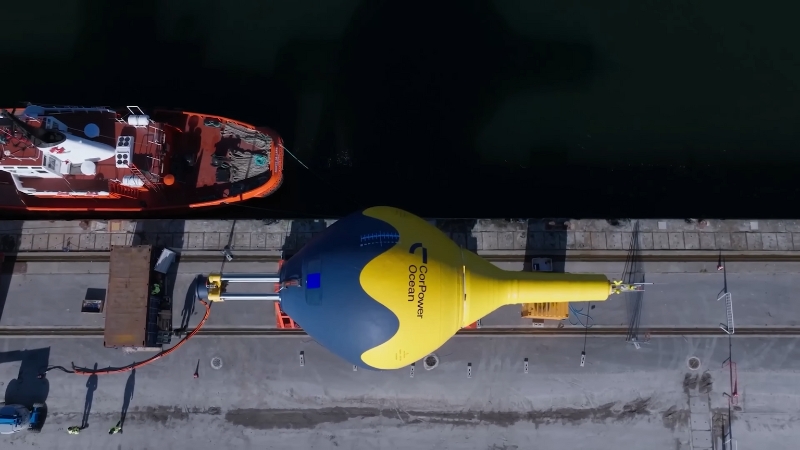
Wave energy produces no emissions during operation and has a low visual profile compared to wind turbines. Its environmental footprint is therefore often considered favorable.
However, impacts must be evaluated carefully.
Potential concerns include localized changes in wave patterns, which can affect sediment transport and coastal processes. Underwater noise from moving components and generators may affect marine mammals, though measured levels are generally lower than those produced by shipping.
Mooring systems and cables interact with the seabed, requiring site-specific ecological assessment.
Data from long-term pilot projects in Portugal, Scotland, and Australia indicate minimal ecological disruption, but large-scale deployment data remains limited.
Impact Area
Potential Effect
Observed Evidence
Emissions
None during operation
Confirmed
Marine noise
Local disturbance
Low to moderate
Seabed interaction
Habitat contact
Site dependent
Visual impact
Minimal offshore
Low
Integration With Power Grids and Future Outlook
@explore.scientist The principle of the floating wave energy converter #knowledge #science #usa #tiktok ♬ original sound – Explore scientists
Wave energy is unlikely to become a dominant global electricity source, but it offers strategic value as a complementary renewable. Its predictability and winter seasonal alignment align well with electricity demand in many coastal regions.
Hybrid offshore platforms combining wave and wind energy are actively researched to share grid connections and reduce infrastructure costs.
From an engineering standpoint, wave energy conversion is no longer a theoretical challenge. The remaining obstacles are economic scaling, long-term reliability, and policy consistency.
Whether wave energy transitions from niche coastal projects to a meaningful contributor in renewable energy portfolios will depend on sustained investment and realistic expectations grounded in engineering and economics rather than optimism alone.