
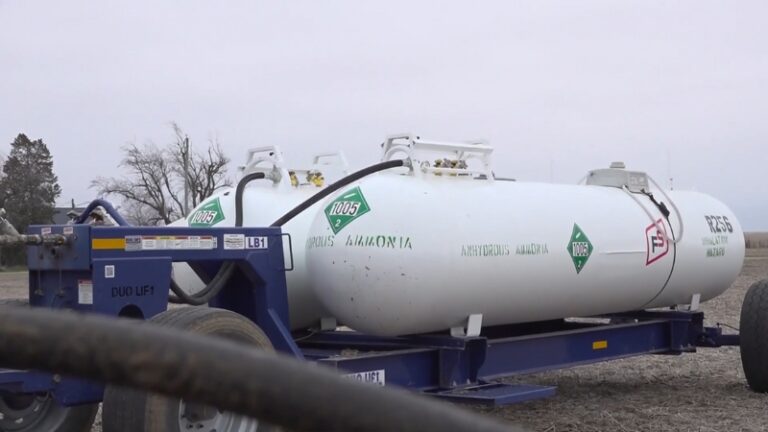
Liquid ammonia, anhydrous NH,₃ is not the only effective nitrogen source, and in many systems it is not the best one.
Farmers can fully replace or partially offset liquid ammonia with urea, UAN solutions, ammonium sulfate, controlled-release fertilizers, manure, cover crops, and biological nitrogen sources.
The best alternative depends on crop nitrogen demand timing, soil texture and pH, moisture conditions, and whether the goal is maximum short-term yield, improved nitrogen efficiency, or long-term soil health.
In many real-world systems, a blended strategy outperforms ammonia alone, reducing nitrogen loss while maintaining yield.
Why Many Growers Are Moving Away From Liquid Ammonia
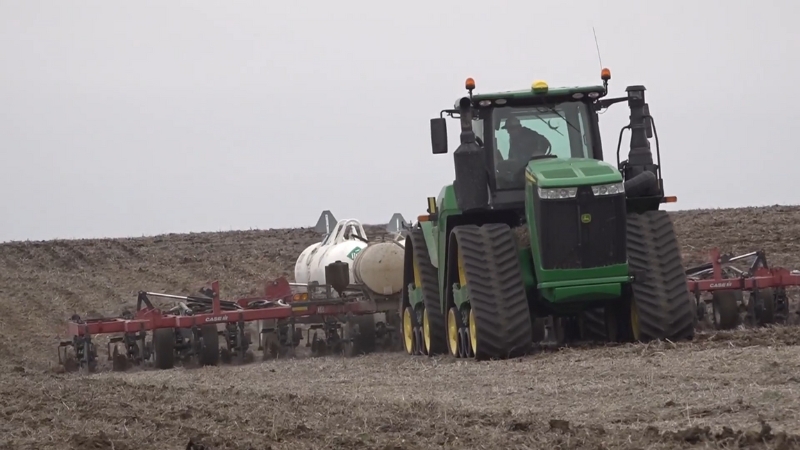
Liquid ammonia delivers a high concentration of nitrogen, but that strength comes with limitations. Application requires specialized equipment, strict safety procedures, and precise soil sealing.
When placement is imperfect, or conditions are warm and dry, nitrogen loss through volatilization can be significant.
Research summarized by organizations such as the USDA and multiple land-grant universities shows that under unfavorable conditions, a noticeable share of applied ammonia never reaches the crop root zone.
Beyond loss risk, ammonia locks nitrogen into a single timing window. Once injected, adjustment is difficult.
Modern nitrogen management increasingly prioritizes timing and efficiency rather than maximum concentration at planting, which is one reason alternatives have gained ground across row crops, vegetables, and mixed systems.
What Makes A Good Liquid Ammonia Alternative
A viable alternative must do more than supply nitrogen on paper. It must deliver plant-available nitrogen when crops actually need it, while minimizing losses to air and water. Three factors matter more than the product name.
The nitrogen form determines how fast it becomes available and how vulnerable it is to loss. Application method influences volatilization, leaching, and denitrification.
Soil interaction controls whether nitrogen stays in the root zone or moves out of reach. Alternatives succeed when they align better with these factors than ammonia does for a specific field and crop.
Synthetic Nitrogen Alternatives Explained
Urea
Urea is the most widely used nitrogen fertilizer globally, supplying about 46 percent nitrogen by weight. Its popularity comes from easier storage, safer handling, and compatibility with a wide range of spreaders and planters.
Once applied, urea converts to ammonium and then nitrate, making nitrogen available but also exposing it to loss if left on the soil surface.
Urea performs best when incorporated into the soil or applied before rainfall or irrigation. On high-pH soils or during warm, dry conditions, surface-applied urea can lose a meaningful portion of its nitrogen unless protected with a urease inhibitor.
Urea Ammonium Nitrate Solutions
UAN solutions combine urea and ammonium nitrate in a liquid form, typically containing 28 to 32 percent nitrogen. Their biggest advantage is flexibility.
Rates can be adjusted easily, applications can be split, and nitrogen can be delivered closer to peak crop demand.
Because UAN contains nitrate, part of the nitrogen is immediately available, which is beneficial for early growth but increases leaching risk on sandy soils or during heavy rainfall. Timing and placement are critical for consistent results.
Ammonium Sulfate And Ammonium Nitrate
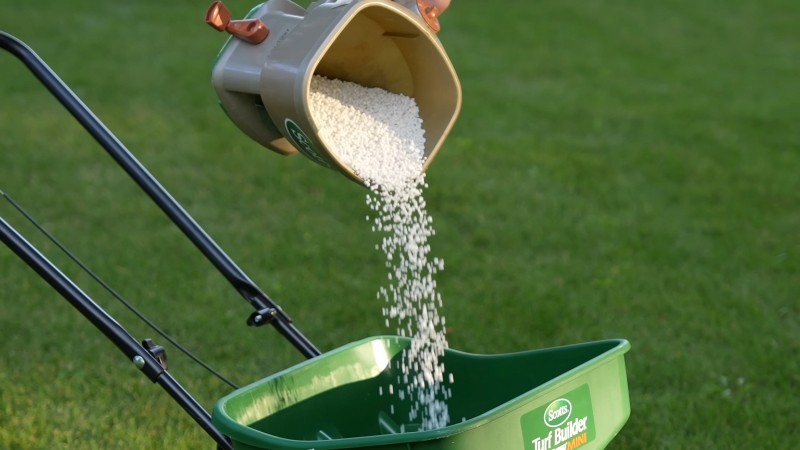
Ammonium sulfate provides nitrogen along with sulfur, making it valuable where sulfur deficiency limits yield. Its ammonium form is relatively stable in soil, but repeated use gradually lowers soil pH, which requires monitoring.
Ammonium nitrate offers predictable nitrogen availability with lower volatilization risk, but higher cost and regulatory constraints limit its use in many regions.
Comparison Of Common Synthetic Alternatives
Fertilizer Type
Nitrogen Content
Primary Strength
Main Limitation
Urea
~46% N
High concentration, easy handling
Volatilization if surface applied
UAN Solution
28–32% N
Precision timing and split application
Nitrate leaching risk
Ammonium Sulfate
~21% N plus sulfur
Supplies sulfur, stable ammonium
Gradual soil acidification
Ammonium Nitrate
~34% N
Consistent availability
Cost and regulation
Enhanced Efficiency Nitrogen Options
Enhanced efficiency fertilizers are designed to keep nitrogen available longer in the root zone. Coated urea products release nitrogen gradually, reducing losses from leaching and volatilization.
Nitrification inhibitors slow the conversion of ammonium to nitrate, which is especially useful in wet soils or coarse textures where nitrate movement is rapid.
Field trials from land-grant universities show that these products often improve nitrogen recovery by 10 to 20 percent under loss-prone conditions.
Yield increases are not always dramatic, but overall nitrogen efficiency and consistency improve, which matters for long-term profitability.
Organic And Biological Nitrogen Alternatives
Animal Manure And Compost
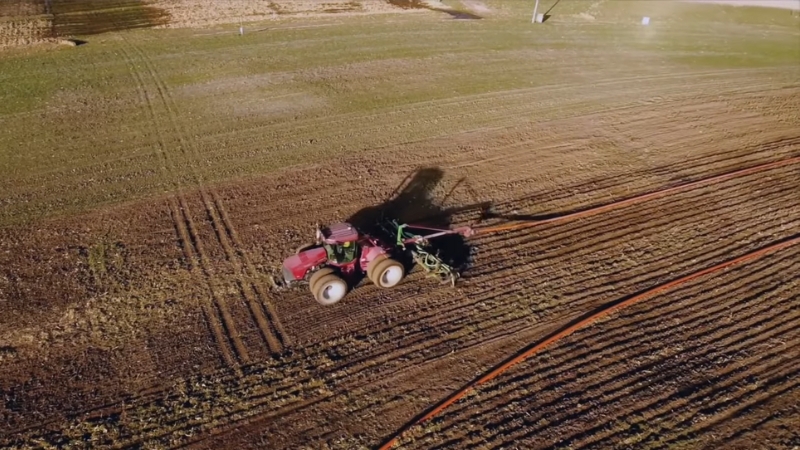
Manure supplies nitrogen alongside phosphorus, potassium, micronutrients, and organic matter. Nitrogen release is biologically driven and slower than synthetic fertilizers, which reduces early losses but requires planning to match crop demand.
Nutrient content varies widely depending on source and handling, making testing essential. When managed correctly, manure improves soil structure, water retention, and microbial activity, often stabilizing yields over time.
Cover Crops And Biological Nitrogen Fixation
Legume cover crops such as clover, vetch, and peas fix atmospheric nitrogen through symbiotic bacteria. Well-managed stands can contribute between 50 and more than 150 pounds of nitrogen per acre to the following crop.
This nitrogen is released gradually as plant residue decomposes. Studies summarized by the University of Minnesota Extension show that legume integration consistently reduces synthetic nitrogen needs while improving soil health indicators.
Microbial Inoculants
View this post on Instagram
Microbial products designed to enhance nitrogen availability or fixation show mixed results.
They work best as supplements rather than replacements and only when soil conditions support microbial activity.
Their value increases in systems already focused on soil biology.
Best Nitrogen Alternatives By Crop Type
Crop Type
Effective Ammonia Alternatives
Why They Work
Corn And Grain Crops
Urea with inhibitors, UAN, ammonium sulfate
High demand and flexible timing
Vegetable Crops
UAN, fertigation, compost
Precise delivery and shallow roots
Pasture And Forage
Urea, manure, legumes
Steady uptake over time
Organic Systems
Cover crops, compost, and manure
Soil-driven nitrogen release
Best Nitrogen Alternatives By Soil Type
Soil Type
Recommended Alternatives
Key Advantage
Sandy Soils
Controlled-release urea, split UAN, cover crops
Reduced leaching
Clay Soils
Urea with inhibitors, ammonium forms
Better nutrient retention
High-pH Soils
Incorporated urea, ammonium sulfate
Lower volatilization
Low Organic Matter
Manure, compost, legumes
Improved holding capacity
Cost, Efficiency, And Yield Reality
On paper, liquid anhydrous ammonia almost always looks like the cheapest nitrogen source. In recent seasons, anhydrous ammonia has commonly ranged from $700 to $900 per ton, which works out to roughly $0.43 to $0.55 per pound of actual nitrogen.
That is why it is often described as the lowest-cost nitrogen option.
But that number assumes every pound applied ends up feeding the crop. In reality, it does not.
Multiple USDA and land-grant studies show that only about 45–55 percent of applied nitrogen is actually taken up by corn or grain crops under typical field conditions.
The rest is lost to volatilization, leaching, or denitrification. When those losses are priced in, the effective cost changes dramatically.
If ammonia costs $0.50 per pound of N and only 50 percent is recovered, the real cost of usable nitrogen becomes about $1.00 per pound.
That is the number that matters.
Now compare that to common alternatives.

Urea typically sells for $550 to $700 per ton, translating to $0.60 to $0.75 per pound of nitrogen. When incorporated or treated with a urease inhibitor, nitrogen recovery commonly improves into the 55–65 percent range.
That puts the effective cost of usable nitrogen at roughly $0.92 to $1.15 per pound, very similar to ammonia in real terms.
UAN solutions usually cost more up front. Typical pricing ranges from $350 to $450 per ton of solution, which equals roughly $0.75 to $0.95 per pound of nitrogen.
But because UAN allows split applications closer to peak crop demand, recovery often reaches 60–70 percent. That brings the usable nitrogen cost into the $1.05 to $1.25 per pound range.
Ammonium sulfate is more expensive on a nitrogen basis. At $450 to $600 per ton, the nitrogen cost often lands between $0.95 and $1.25 per pound of N.
However, when sulfur is required, this cost offsets separate sulfur fertilizer purchases, which is why it remains economical in many soils.
Bottom Line
@agricultureandtechnolog Urea vs Ammonium Nitrate – Which one is better for your crops? Learn when to use each nitrogen fertilizer to get the best results in your field! 🌱 #FarmingTips #AgTok #CropNutrition #SoilScience #UreaFertilizer #AmmoniumNitrate #AgEducation #FarmLife #RegenerativeAg #SustainableFarming #GrowBetter #NitrogenFertilizer #FertilizerFacts #AgKnowledge #SmartFarming ♬ sonido original – Agriculture and Technology
Liquid ammonia is no longer essential for high yields. Urea, UAN, ammonium sulfate, enhanced efficiency fertilizers, manure, and biological nitrogen sources can fully replace or outperform ammonia when matched correctly to crop needs and soil conditions.
The most successful systems focus on nitrogen timing, retention, and uptake rather than raw concentration, delivering stable yields with lower losses and greater flexibility.