
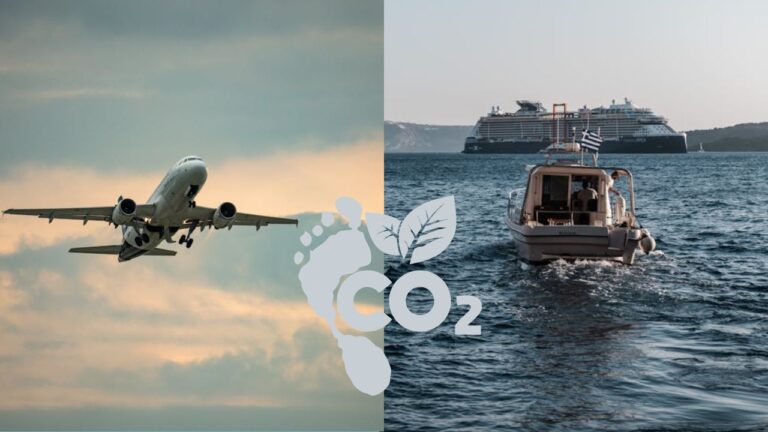
Transportation plays a major role in global greenhouse gas output, accounting for 16.2% of total emissions worldwide.
Air transport alone contributes about 1.9%, while maritime transport adds roughly 2.5%.
Rising concern about climate change has pushed travelers, businesses, and governments to compare environmental costs linked to different travel options, especially flights and boat travel.
Comparisons often focus on carbon dioxide output, yet additional pollutants and indirect effects also shape overall climate impact.
Both passenger travel and freight movement present trade-offs that vary widely depending on distance, technology, and usage patterns.
Air Travel has a High Altitude and High Impact

Air travel produces some of the highest emissions per passenger kilometer, especially on short-distance routes where fuel-intensive takeoff phases dominate total output.
Short-haul flights release close to 244 grams of carbon dioxide per passenger per kilometer, a figure that far exceeds many surface transport options.
Growth in flight demand has driven a long-term rise in pollution, with domestic aviation emissions in the United States increasing by about 17% since 1990.
Popular leisure routes highlight how quickly emissions accumulate, as a single round trip between Orlando and Nassau generates roughly 368 pounds of carbon dioxide per passenger.
Climate impact extends past carbon dioxide alone.
Carbon dioxide accounts for around 70% of total aircraft emissions, while other pollutants intensify warming effects at cruising altitude.
Additional contributors include the following:
- Nitrogen oxides that trigger ozone formation
- Contrails that trap heat and enhance radiative forcing
- Water vapor released at high altitude that amplifies warming
Only about 10% of aircraft emissions occur during takeoff and landing. Majority of pollution enters the atmosphere during cruise phases, where lower air density and atmospheric chemistry magnify heat retention.
Fuel Efficiency and Aircraft Differences
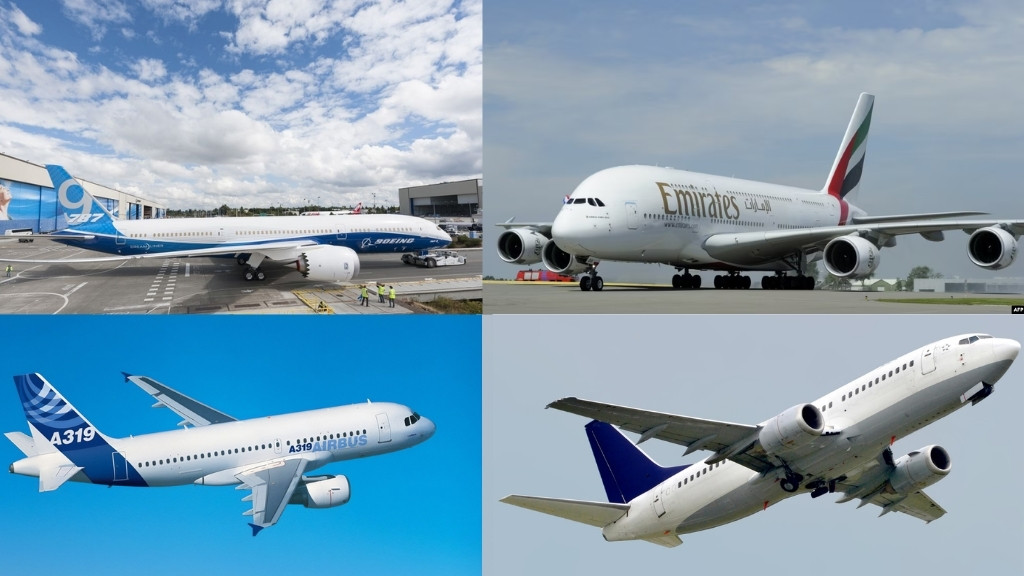
Fuel consumption varies widely across aircraft types, making technology choice a critical factor in aviation emissions.
Older and less efficient aircraft burn substantially more fuel per hour compared with newer designs.
- Airbus A319 consumes roughly 650 gallons per hour
- Boeing 737-300 burns close to 800 gallons per hour
- Boeing 787-9 achieves about 60% higher efficiency compared with Airbus A380
Efficiency gains in modern aircraft result largely due to lighter composite materials, advanced aerodynamics, and next-generation engines.
Fleet composition plays a major role, since airlines operating newer aircraft fleets produce fewer emissions per seat.
Seating density also matters, as fuller cabins spread emissions across more passengers. Maintenance quality further influences fuel burn, since poorly maintained engines consume more fuel over time.
Cargo by Air

Air freight ranks among the most emission-intensive freight options available.
Carbon output per kilogram-kilometer reaches levels dramatically higher than maritime shipping. Data shows a stark contrast in efficiency.
Air freight emits 15 to 25 times more carbon dioxide per kilogram-kilometer than sea freight
Speed and reliability justify air cargo use in limited cases, particularly for pharmaceuticals, electronics, and fresh produce that lose value quickly.
Direct delivery routes can shorten supply chains and reduce reliance on long trucking routes for final distribution.
Overall climate cost remains extremely high when compared with ocean shipping, making air cargo a last-resort option rather than a sustainable default.
Boat Travel Is a Mixed Bag
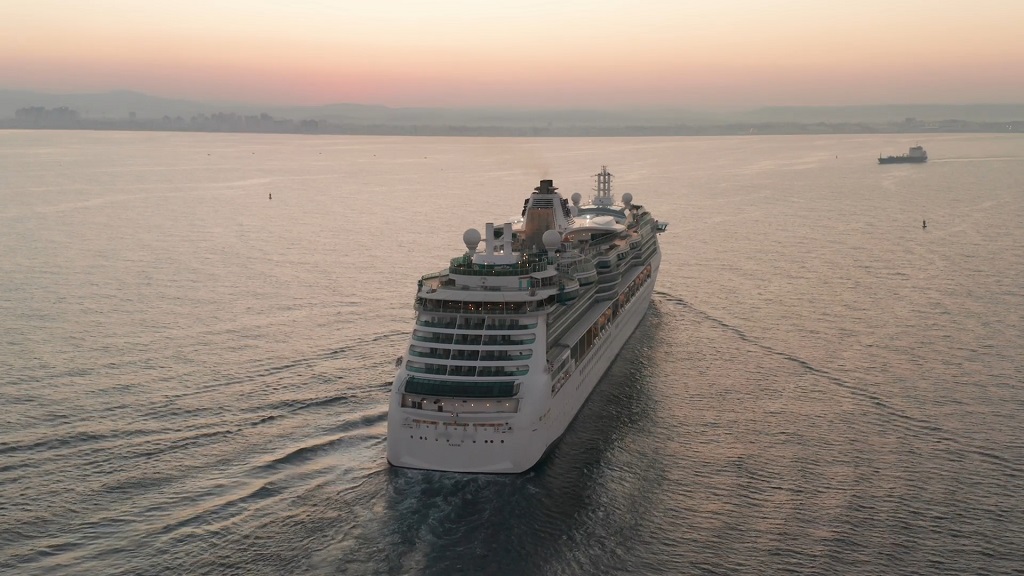
Boat travel presents a wide variation in environmental performance depending on vessel type and usage.
For travelers seeking more flexible and potentially lower-impact alternatives, options like yacht charter France offer access to the French Riviera aboard smaller, more personalized vessels.
Fuel choice explains much of this disparity. Marine diesel releases approximately 21.24 pounds of carbon dioxide per gallon. Pollution linked to cruise ships extends well past carbon dioxide, as shown by several key figures.
Cruise vessels generate about 6% of global marine black carbon emissions while representing only 1% of ships
Nitrogen oxide pollution linked to cruise operations equals up to 15% of Europe’s total car fleet emissions
Solid waste generation can reach seven tons per day per ship
Large portions of this waste get incinerated or discharged at sea, placing long-term pressure on marine ecosystems.
Ocean Acidification and Waste
Carbon dioxide released by ships dissolves directly into seawater, accelerating ocean acidification that damages coral reefs and shellfish populations.
Black carbon emissions produced by cruise engines trap heat far more efficiently than carbon dioxide, multiplying warming effects near polar and coastal regions.
Port cities face especially high pollution exposure. Sulfur oxide concentrations near busy ports can reach levels several times higher than road traffic pollution, with Barcelona often cited as a clear example.
Marine ecosystems absorb additional stress through wastewater discharge, food waste dumping, and fuel residue leaks.
Accumulated impacts persist long after ships leave port, affecting water quality and biodiversity.
Ferries
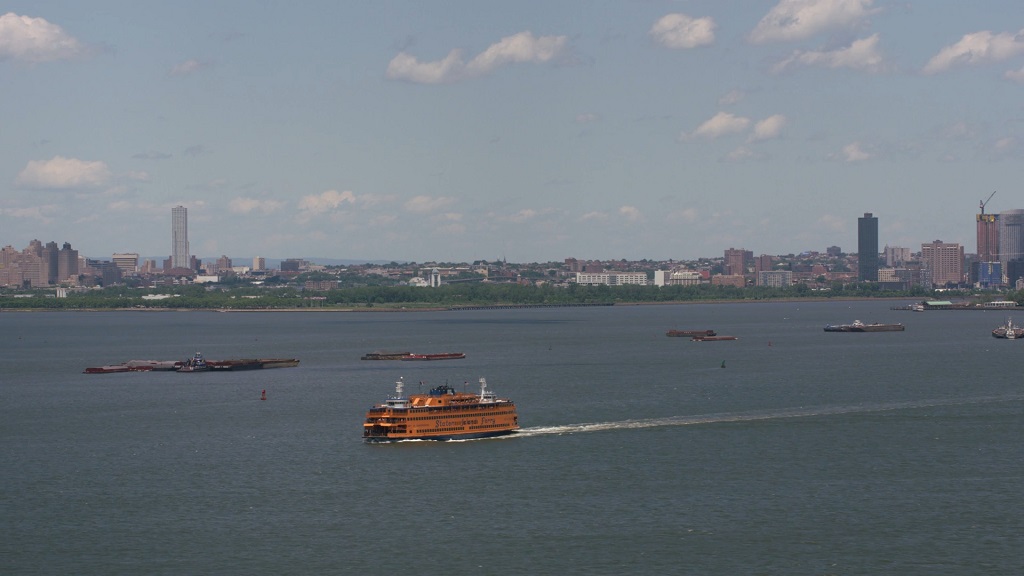
Ferries perform far better environmentally compared with cruise ships and airplanes, particularly on short and medium distances. Emissions per passenger remain low, especially for travelers without vehicles.
Specific emission figures show a clear advantage:
- Foot passengers generate about 19 grams of carbon dioxide per kilometer
- Cars carrying four passengers emit roughly 44 grams per kilometer
- Air travel averages around 244 grams per passenger-kilometer
A real-world comparison illustrates this difference clearly.
Ferry travel combined with car transport releases roughly 29.6 kilograms per person, more than four times lower.
Performance varies depending on operational factors.
Speed, weather conditions, and route length all influence fuel use. Fuel choice also plays a major role. Liquefied natural gas ferries can reduce emissions by about 25% compared with diesel-powered vessels, though fossil fuel dependence remains.
Electric and hydrogen ferries show strong potential when powered by renewable energy, offering one of the lowest-emission options for short sea crossings.
Freight Transport Ship vs Plane
Maritime shipping carries over 80% of global trade by volume, forming the foundation of international commerce.
Sea freight achieves far lower emissions per cargo unit, producing 15 to 25 times less carbon dioxide per kilogram-kilometer compared with air freight.
Efficiency comes at environmental cost in other areas. Marine transport contributes to pollution through oil leaks, chemical discharge, and plastic waste.
Last-mile trucking adds additional emissions once cargo reaches ports.
Waste disposal and crew-related pollution accumulate during long voyages. Several shipping companies now test biofuels and pursue net-zero emission targets by 2050 in an effort to reduce long-term impact.
Factors That Influence Environmental Impact
Trip length and travel speed strongly affect fuel consumption, as slower travel generally reduces emissions. Passenger load and vehicle efficiency matter greatly, since full planes or ferries distribute pollution across more travelers.
Fuel type shapes pollution output in distinct ways. Jet fuel produces high levels of carbon dioxide, nitrogen oxides, and contrails, while marine diesel generates carbon dioxide and sulfur oxides.
Liquefied natural gas lowers emissions relative to diesel but remains fossil-based. Electric and hydrogen systems offer cleaner performance when powered sustainably.
Luxury amenities significantly increase emissions, especially on cruise ships that operate pools, restaurants, theaters, and other energy-intensive facilities.
The Verdict – Which Is Greener
Ferries, especially for foot passengers, represent one of the most eco-friendly passenger travel options available.
Cruise ships rank among the highest polluters in passenger transport and often exceed aviation emissions on comparable routes.
Planes generate high emissions yet still serve important roles in urgent transport situations such as medical supplies or perishable goods.
Freight shipping by sea remains far cleaner than air cargo on a per-unit basis, even with ongoing concerns about marine pollution.