
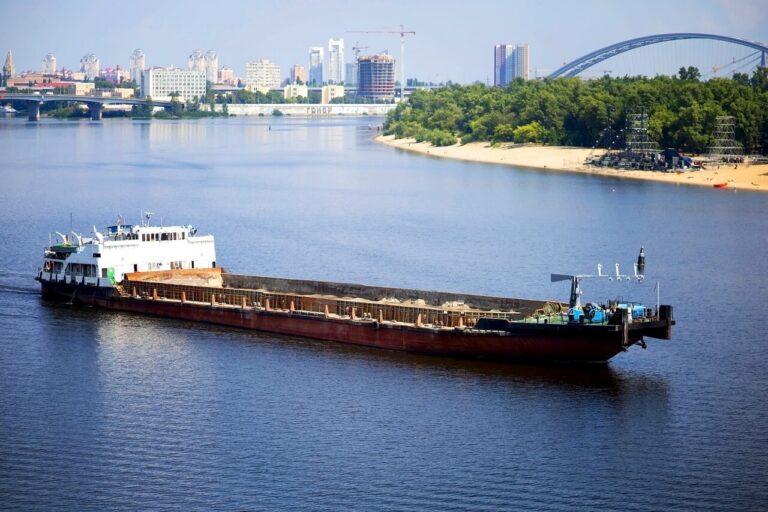
Europe faces a difficult transport problem. Freight demand is increasing, road networks are congested, and pressure to reduce transport emissions continues to grow.
Across 25 EU Member States, more than 41,000 kilometers of navigable waterways are available for commercial transport. Rivers and canals, however, carry only about 6% of EU freight.
Moving suitable cargo onto inland waterways could reduce emissions, ease road congestion, and limit wear on major transport corridors.
River freight cannot replace trucking in every situation, but it can take a significant share of high-volume cargo off European roads.
Why Road Freight Is a Problem
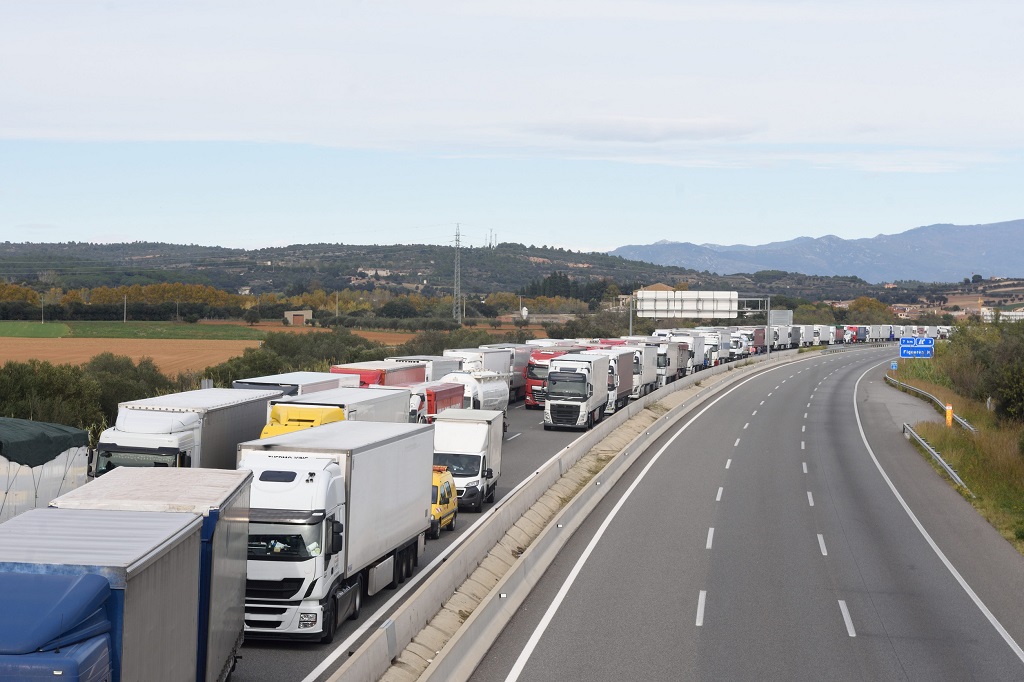
Road transport continues to handle a large share of European freight even as governments seek cleaner transport systems.
Freight activity across the EU increased by 11% between 2010 and 2023. During that period, rail and inland waterways lost ground. Their combined share reached a peak of 27% in 2012 before falling to 22% in 2023.
Heavy dependence on trucks creates several environmental and infrastructure problems. Heavy-duty vehicles produce CO₂, nitrogen oxides, and particulate pollution while contributing to congestion on already busy roads.
Research based on 1.2 billion GPS records collected through heavy-duty trucks found that reducing congestion alongside vehicle electrification produced much stronger results than electrification alone.
Peak CO₂ emissions dropped by 34%, while peak NOx emissions fell by 43% compared with an electrification-only scenario.
Although that research examined freight traffic in Shenzhen rather than Europe, its findings point to a broader issue. Cleaner vehicles can lower emissions, but congested freight networks still create environmental costs.
Reducing truck traffic can therefore complement cleaner vehicle technology instead of relying on vehicle replacement alone.
Best Use Cases
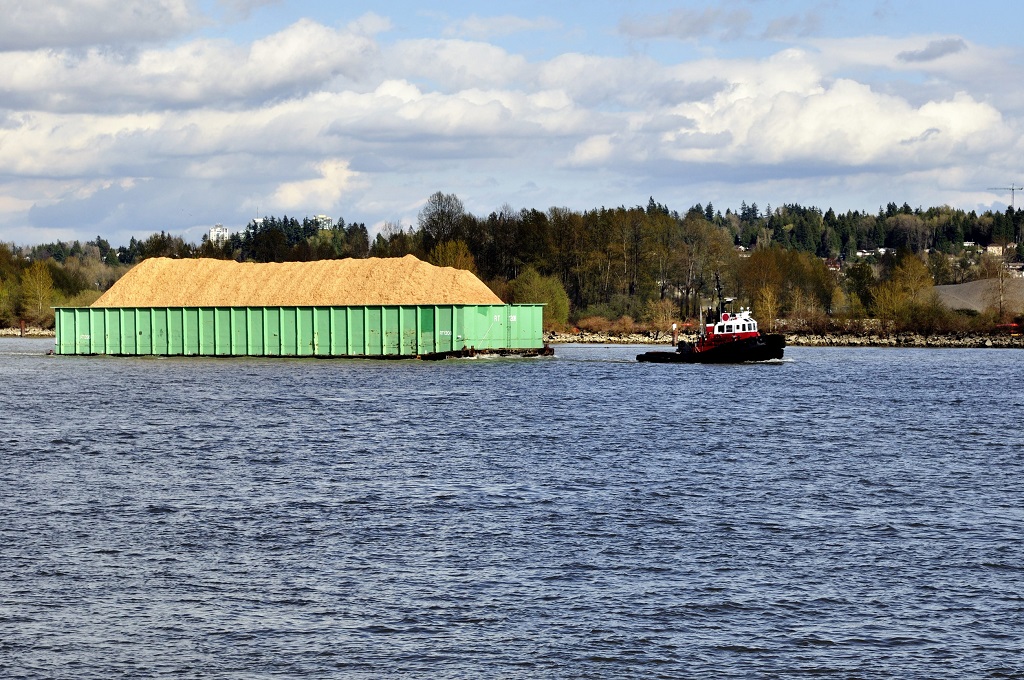
River freight works best where large cargo volumes can move along predictable routes.
Major European waterways support this type of freight movement, with Danube transport used for bulk cargo, construction materials, industrial goods, containers, and oversized loads.
Suitable cargo categories include:
- construction materials and demolition waste
- bulk commodities
- shipping containers
- recurring urban deliveries
Construction materials are especially practical because they are heavy, often transported in large quantities, and generally less sensitive to longer travel times.
Container traffic can also benefit when inland terminals provide efficient connections between ports, industrial areas, warehouses, and cities.
Urban logistics projects show how river freight can connect with cleaner delivery systems.
Strasbourg uses a river shuttle to move around 122 tonnes of beverages and parcels each day. Cargo is then transferred to electric cargo bikes for delivery within the city.
IKEA has used barges since 2022 to transport customer orders to the Port of Bercy in Paris. Electric vehicles handle the final delivery stage after cargo reaches the port.
Such systems demonstrate an important advantage of river transport. Barges do not need to complete an entire delivery route on their own.
Waterways can handle the high-volume section of a trip, while electric vans, trucks, cargo bikes, or rail connections complete shorter sections near the origin or destination.
Challenges
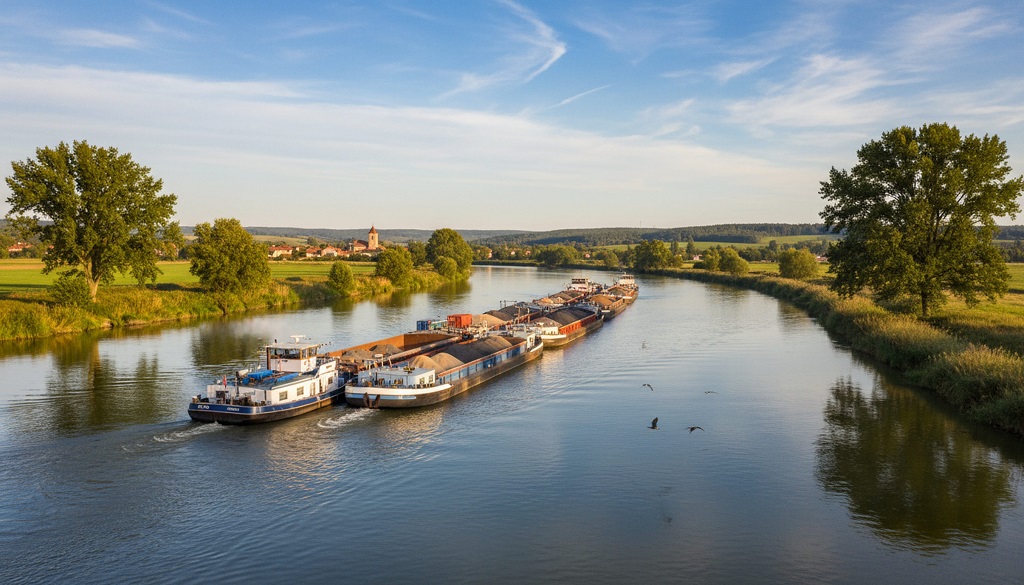
River freight also has important limitations.
Travel times are generally slower than trucking, which can make inland shipping less practical for urgent or time-sensitive cargo.
Many routes also require road or rail transport at both ends of a trip because factories, warehouses, stores, and construction sites are rarely located directly beside navigable waterways.
Recent freight statistics also show that inland shipping is not automatically growing.
European inland-waterway freight declined to 469 million tonnes in 2023, a decrease of 3.7% compared with the previous year. Freight performance also dropped by 4.6% to 116 billion tonne-kilometers.
Usage is highly concentrated geographically. Germany and the Netherlands account for almost 72% of European inland-waterway freight.
Several structural barriers limit wider expansion:
- ageing vessels require modernization or replacement
- workforce demographics create long-term labor concerns
- locks, ports, terminals, and waterways need infrastructure upgrades
- connections between river terminals and road or rail systems can be inefficient
- zero-emission fuel and charging infrastructure is still limited
Climate conditions can create additional operational risks. Low water levels can reduce vessel capacity on some rivers, while flooding and extreme weather can disrupt navigation.
Addressing these problems will require investment in both vessels and supporting infrastructure.
Environmental Benefits of River Freight
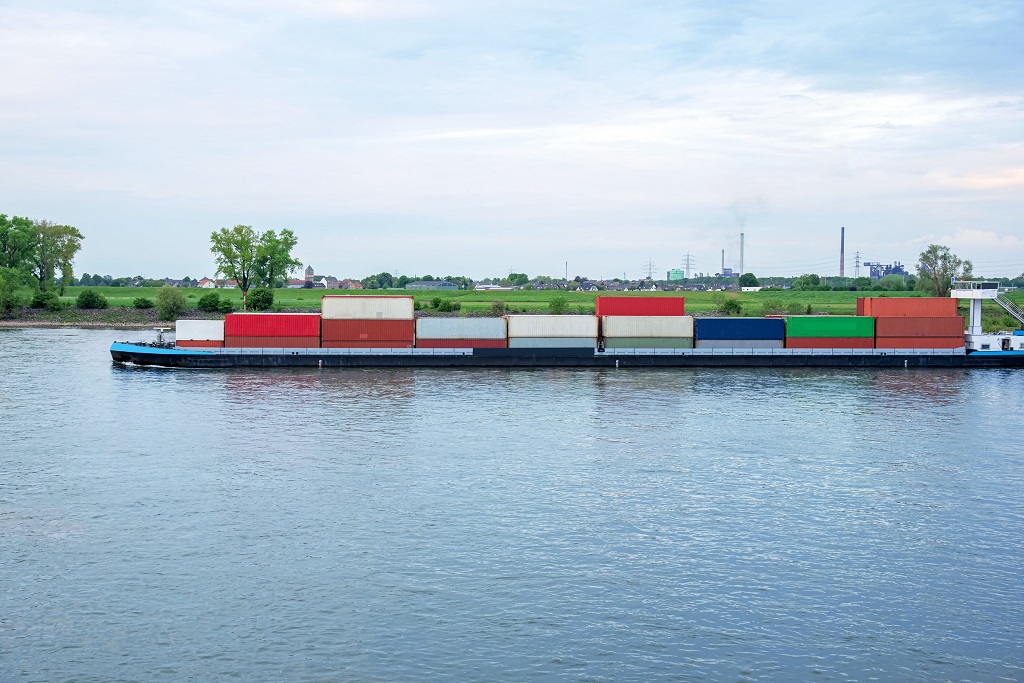
Inland vessels can move large quantities of cargo using far fewer vehicle movements.
River freight can produce around five times less CO₂ than road freight. A river convoy carrying 5,000 tonnes can replace roughly 230 to 250 trucks.
Fuel efficiency also improves when cargo is moved by barge. Inland vessels generally consume much less fuel per tonne of goods carried than heavy trucks.
Europe already has extensive waterway infrastructure capable of handling additional freight, yet considerable capacity remains unused.
Several environmental advantages make river transport especially useful for heavy cargo:
- fewer vehicle movements are needed to transport the same volume of goods
- fuel consumption per tonne can be substantially lower
- reduced truck traffic can lower road-related air pollution
- less congestion can reduce inefficient stop-and-go vehicle operation
Cleaner vessel technology could increase these benefits further. Initiatives such as NAIADES III support modernization of inland navigation, including efforts to expand low-emission and zero-emission vessel fleets.
Modern barges powered by cleaner fuels or electric systems could make already efficient water transport even less carbon intensive.
Reducing Road Congestion
Moving heavy cargo onto rivers can directly reduce the number of trucks traveling through congested areas.
One typical river vessel carrying around 750 tonnes can replace more than 30 truck journeys. Fewer truck movements can reduce traffic pressure, noise, local air pollution, and road maintenance demands.
View this post on Instagram
Large infrastructure projects already demonstrate how significant those reductions can become.
London’s Thames Tideway project is expected to avoid almost 75,000 road trips through its use of river transport.
Associated reductions in worksite carbon emissions are estimated at roughly 5,200 tonnes.
Paris provides another example. During refurbishment of La Samaritaine, barges transported 110,000 cubic meters of waste, preventing a substantial volume of heavy-truck traffic in the city center.
Urban construction projects can gain particular value through river logistics because building materials and waste often involve large volumes and heavy loads.
Removing even part of that traffic can free road capacity for buses, passenger vehicles, emergency services, deliveries, and other users.
What Europe Should Do
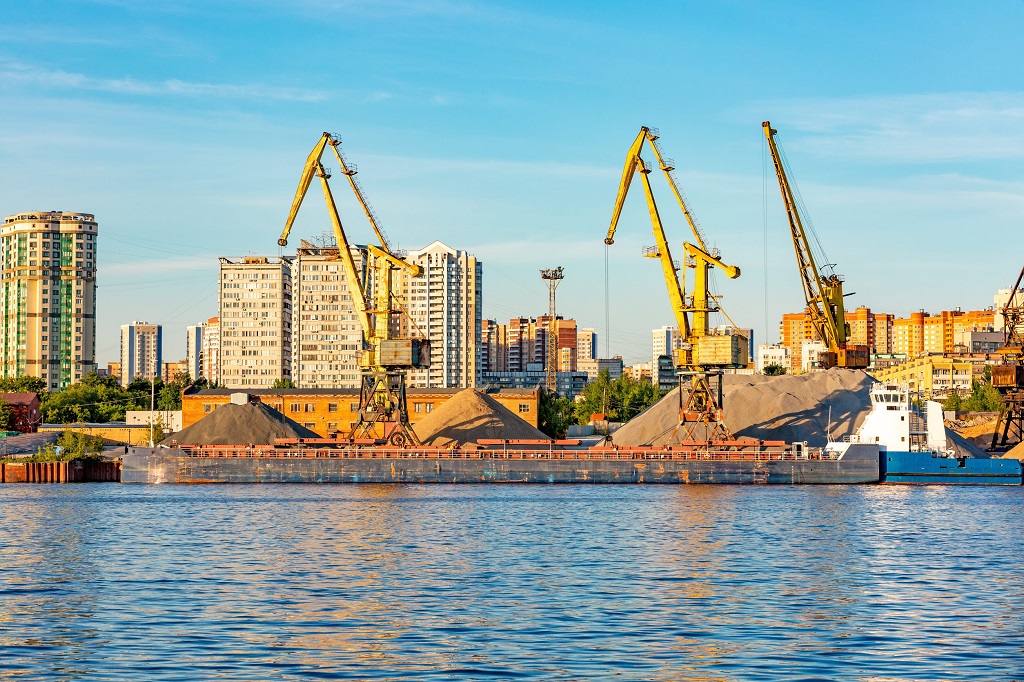
Europe can increase river freight by improving the infrastructure and logistics systems surrounding inland waterways.
Ports, locks, terminals, and navigation channels need modernization. Better connections between river terminals, rail networks, and road systems would also make multimodal freight easier to organize.
Major priorities include improved port facilities, stronger transport infrastructure, and more efficient digital logistics.
EU policy already aims to increase transport through inland waterways and short-sea shipping by 25% by 2030.
Investment should focus on corridors where waterways already connect major ports, industrial regions, logistics centers, and large cities. Such routes offer the strongest potential for shifting high-volume freight away from roads.
Digital tools could also improve scheduling, cargo tracking, terminal coordination, and transfers between transport modes.
Cleaner vessel fleets should form another part of the investment strategy. Electric propulsion, alternative fuels, more efficient engines, and modern vessel designs can reduce emissions further.
Last-mile transport also needs attention. Electric trucks, vans, and cargo bikes can connect river terminals with customers while limiting local emissions.
Summary
River freight will not eliminate Europe’s need for trucks, but it can reduce the number of heavy vehicles using congested roads.
One barge can transport cargo that might otherwise require dozens or even hundreds of truck movements. Lower emissions per tonne, reduced congestion, and less pressure on road infrastructure make inland shipping especially valuable for high-volume freight.
More than 41,000 kilometers of navigable waterways already exist across 25 EU Member States, yet inland waterways carry only about 6% of EU freight.
Greater use of that network could help Europe build a more efficient freight system. Rivers can carry heavy and high-volume cargo, rail can support long-distance inland transport, and cleaner trucks, vans, and cargo bikes can handle flexible first-mile and last-mile delivery.