
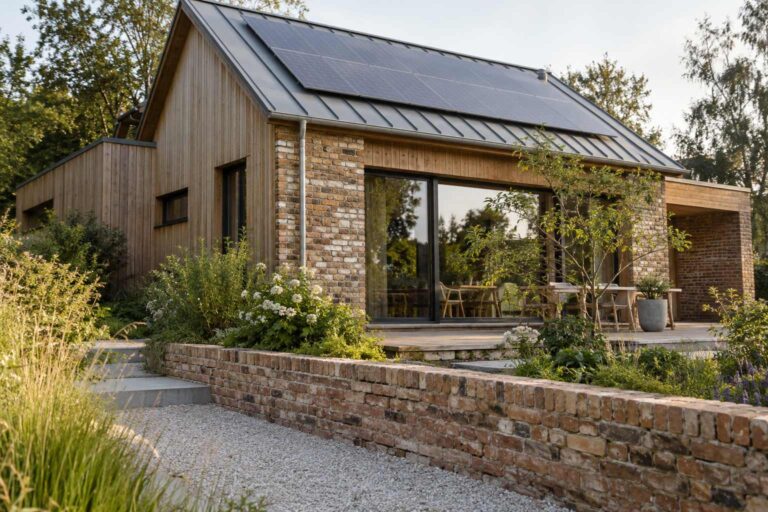
Replacing the siding, roof or driveway can create a surprising amount of waste. It also means buying materials that require energy to manufacture, transport and install. Even products advertised as environmentally friendly may have a considerable carbon footprint before they reach your home.
Some of the better choices are also ordinary building materials. Reclaimed bricks, responsibly sourced timber, recycled steel and lower-carbon concrete can all reduce environmental impact when used in the right conditions.
Before choosing anything new, inspect what you already have. Repairing sound brickwork or restoring timber siding may produce less waste than removing it and installing a replacement.
1. FSC-Certified Timber for Exterior Siding and Garden Structures
Timber is a natural choice for siding, porches, pergolas and other exterior features. It is renewable, relatively easy to repair and can last for decades with suitable installation and maintenance.
The environmental concern is where the wood comes from. Timber harvested through destructive forestry practices can contribute to habitat loss and forest degradation.
Look for products carrying credible certification. The Forest Stewardship Council certification system provides a way to verify that wood used in construction comes from certified sources.
For exterior walls, cedar and other naturally durable species are popular choices. Insects, moisture and the local climate still affect performance.
Timber siding needs proper ventilation, drainage and suitable protective finishes. Even durable wood can rot when moisture becomes trapped behind the boards.
Best for Exterior siding, porches, pergolas and decorative screens.
2. Reclaimed Bricks for Patios, Paths and Exterior Walls
Old bricks removed from a demolished building can find a second home in a garden path, patio or decorative wall.
Reusing bricks avoids manufacturing new ones and keeps usable materials out of demolition waste. Older bricks can also have attractive colours and textures that are difficult to reproduce.
However, not every reclaimed brick belongs outdoors. Some were manufactured for interior walls and may deteriorate when repeatedly exposed to rain and freezing temperatures.
Before purchasing, confirm that the bricks are suitable for the intended exposure. Check for cracks, crumbling surfaces and old mortar that may be difficult to remove.
Reclaimed bricks are especially useful for small projects where their irregular appearance adds character. A garden walkway or low decorative wall can use a modest quantity without requiring a completely new masonry installation.
Best for Garden paths, patios, edging and suitable nonstructural masonry.
3. Recycled Steel for Roofing and Structural Features
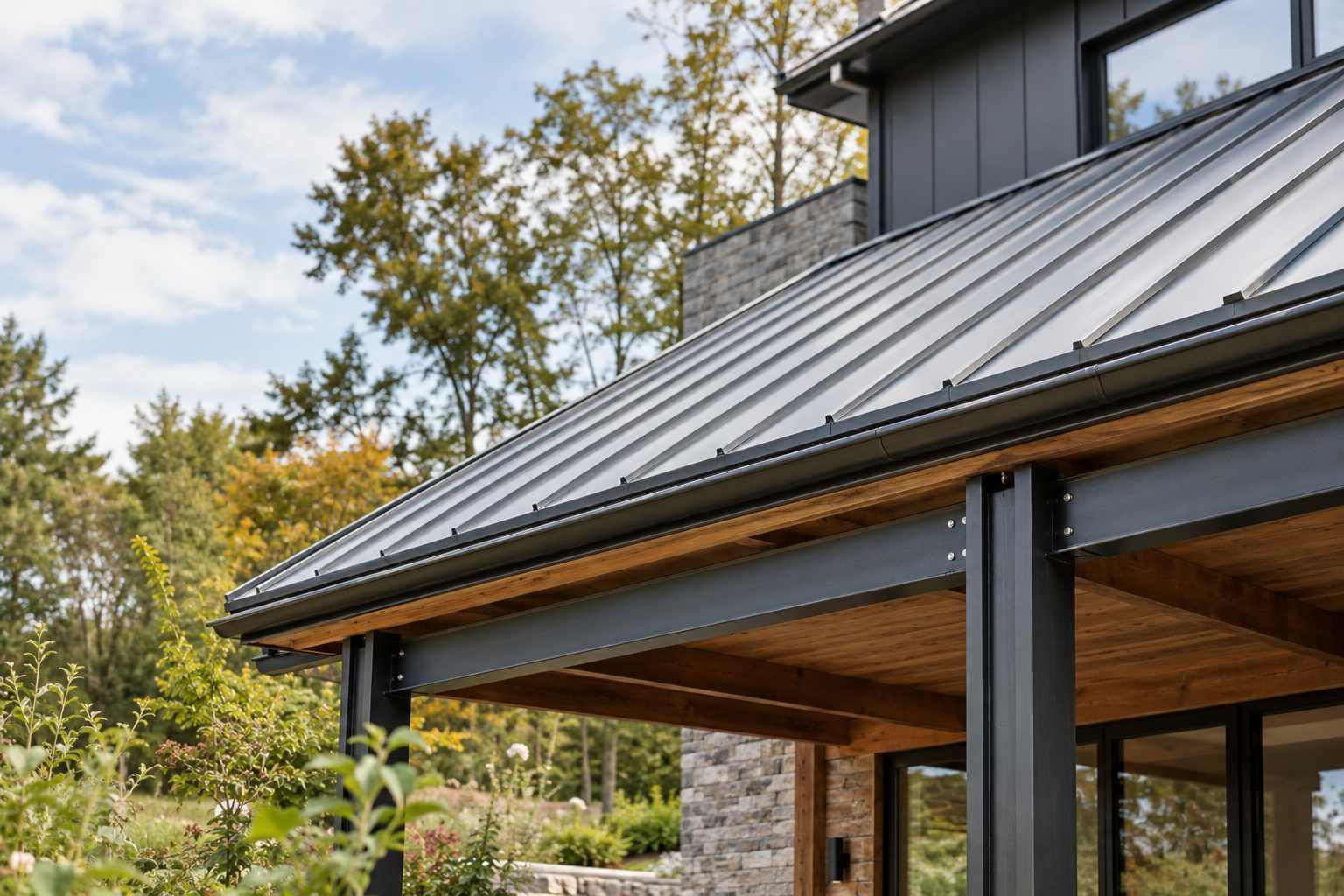
Steel can be recycled repeatedly, making recycled-content products worth considering when replacing metal roofing or certain structural components.
Recycled steel still requires energy to process and manufacture. The environmental benefit depends on the amount of recycled material, production method and energy source.
For a home renovation, metal roofing is one of the most visible applications. A properly specified steel roof can provide a long service life, particularly when the coating suits the local climate.
In coastal areas, corrosion resistance deserves attention. Salt exposure can damage unsuitable finishes and shorten the life of metal components.
Ask suppliers for recycled-content information and an Environmental Product Declaration, or EPD, where available. The EPA explains embodied carbon in construction materials and how product data can support more informed purchasing decisions.
Best for Metal roofing, structural components and exterior architectural features.
4. Composite Cladding Made With Recycled Materials
Some homeowners want the appearance of timber siding without regular painting or staining. Wood-plastic composites offer another option, although their environmental performance depends on the exact product.
Composite boards may contain recycled plastic, reclaimed wood fibres or a combination of new and recycled ingredients. The percentage of recycled content is not the same across manufacturers.
When comparing exterior cladding, check the declared recycled content, expected service life, installation requirements and available recycling or disposal options before choosing a product.
Durability can make an important contribution to sustainability. A product that lasts for many years without frequent replacement may create less waste over its service life.
However, composite products are not automatically more environmentally friendly than responsibly sourced timber. Manufacturing energy, plastic content, transport and end-of-life handling all affect the result.
Follow the manufacturer’s installation instructions, including requirements for ventilation, thermal expansion and fire performance.
Best for Exterior wall finishes and selected facade renovations.
5. Low-Carbon Concrete for Driveways and Foundations
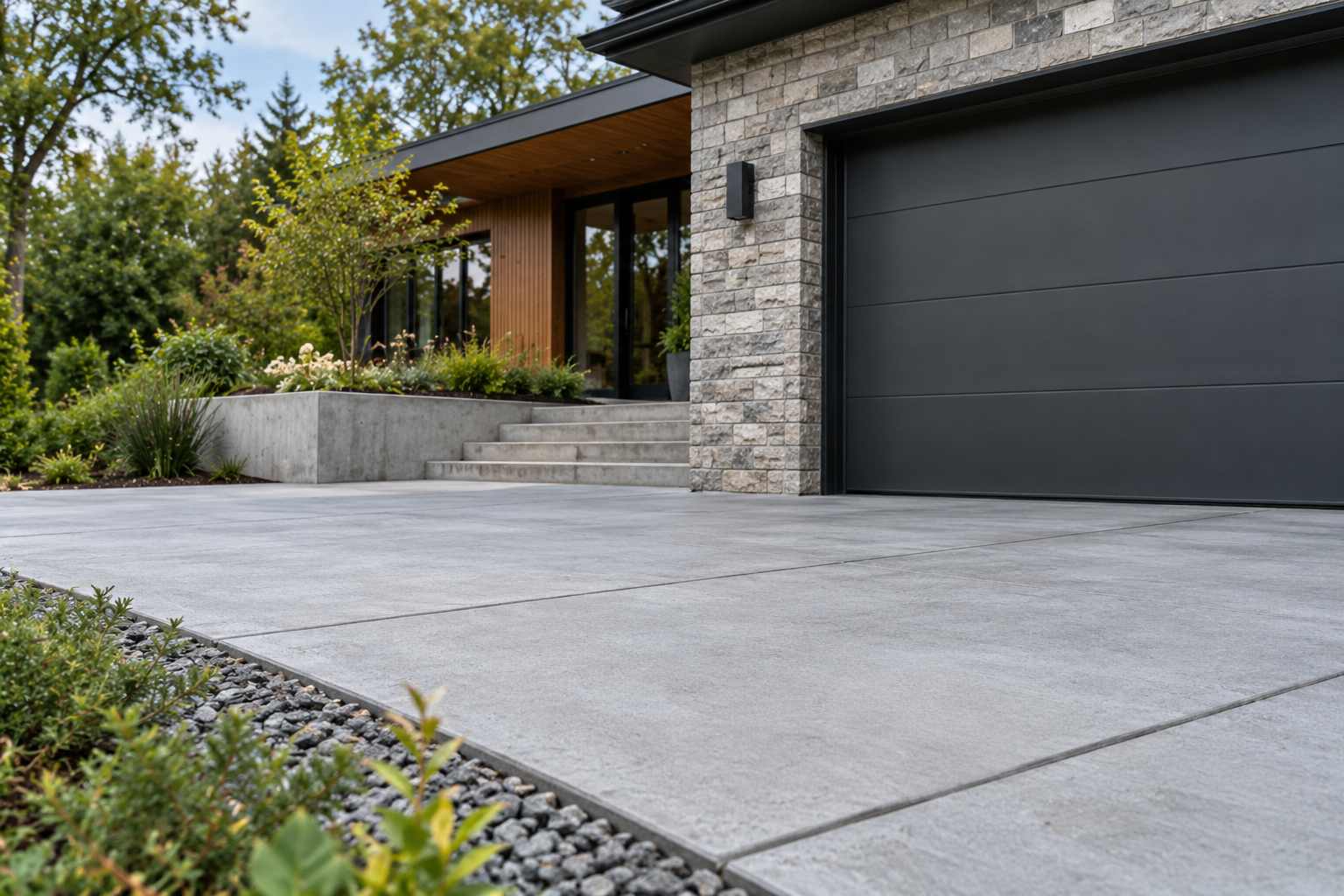
Concrete is difficult to avoid in residential construction. Foundations, driveways, paths and retaining walls all rely on its strength and durability.
The cement used in conventional concrete is also responsible for substantial carbon emissions. Manufacturing Portland cement releases carbon dioxide through fuel consumption and the chemical processing of limestone.
Lower-carbon concrete can reduce those emissions by using less conventional cement clinker or replacing part of it with other suitable materials.
Common options include Portland-limestone cement and mixes containing supplementary cementitious materials, such as slag or calcined clay.
Our article on low-carbon concrete and cement alternatives explains the materials already being used and the performance requirements contractors must consider.
For a residential driveway or foundation, request a concrete mix that meets the specified strength, exposure and durability requirements. A lower-carbon product is only useful if it remains suitable for the job.
Best for Driveways, foundations, paths and structural concrete work.
6. Reclaimed Natural Stone for Paths and Garden Walls
Natural stone can last for generations. Granite, slate and certain types of sandstone are suitable for many exterior applications when properly selected and installed.
Quarrying and transporting new stone can create considerable environmental impacts, particularly when heavy materials travel long distances.
Reclaimed stone offers a way to reuse material from demolished buildings, old patios and landscaping projects.
Look for local architectural salvage yards and suppliers carrying recovered paving slabs or building stone. Reusing material from nearby projects may also reduce transportation needs.
Check each piece for cracks, weather damage and suitability for outdoor use. Some stone types become slippery when wet or deteriorate in freezing conditions.
Reclaimed paving may have uneven dimensions, which increases installation time. A skilled contractor can help create a stable surface without unnecessary cutting and waste.
Best for Patios, garden paths, retaining walls and landscape features.
7. Cellulose Insulation Made From Recycled Paper
Exterior renovation work often provides an opportunity to improve insulation inside walls and beneath the roof.
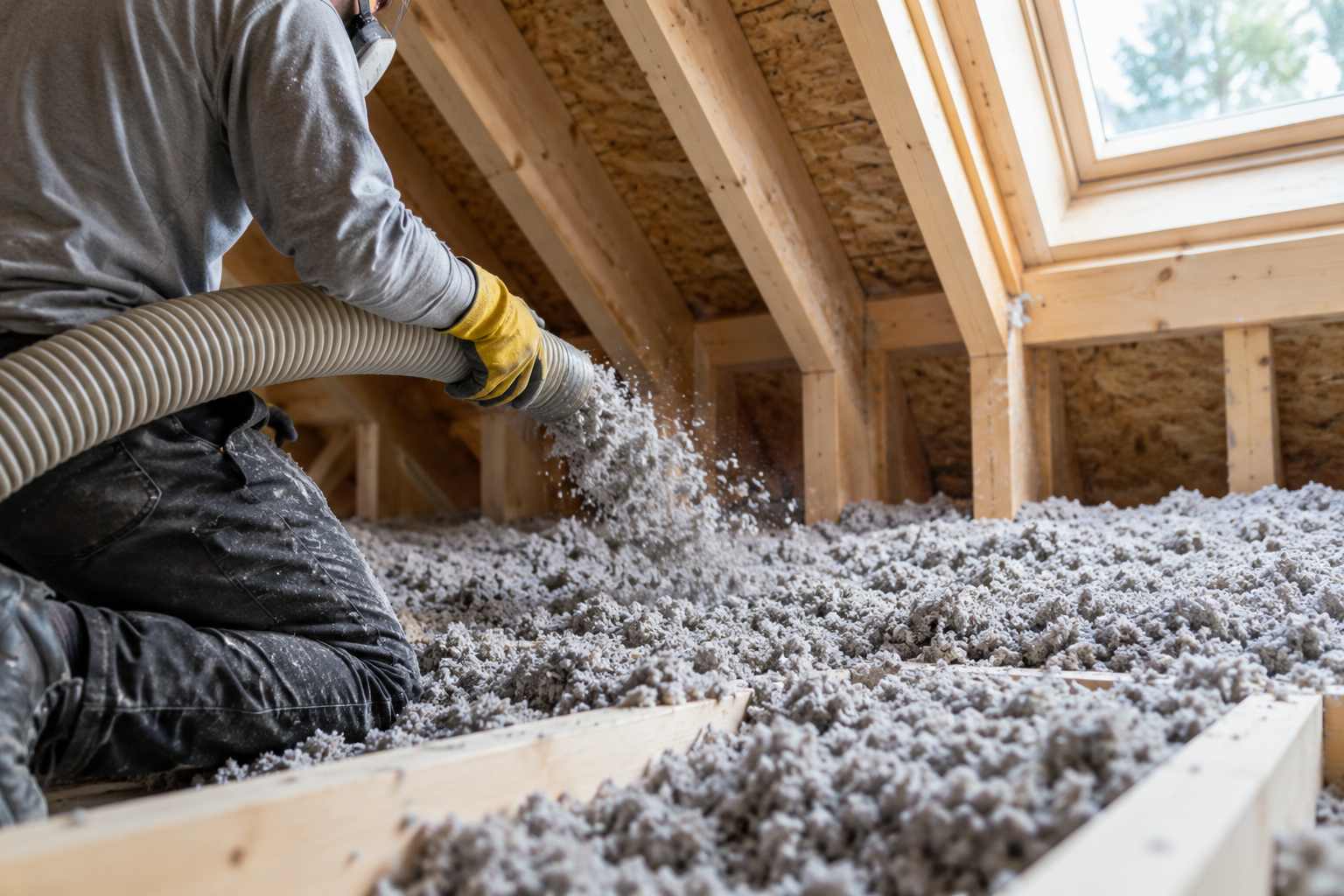
Cellulose insulation is commonly manufactured using recycled paper treated to meet fire and pest-resistance requirements.
It can be installed in certain wall cavities and attic spaces, reducing unwanted heat transfer when correctly specified.
Insulation also helps reduce the energy needed to heat and cool a house. The savings depend on the existing insulation, local climate and building construction.
Cellulose is not suitable for every exterior wall assembly. Moisture control, air sealing and the required installation density need careful planning.
For a house with an older facade, improving insulation during siding replacement can be more economical than reopening the walls later.
The U.S. Department of Energy insulation guidance explains the role of insulation levels, materials and installation in home energy performance.
Best for Attics and suitable wall cavities during exterior renovation.
8. Cork Insulation Boards for Exterior Walls
Cork comes from the bark of cork oak trees. The bark can be harvested without cutting down the tree, making responsibly produced cork an interesting renewable material.
Expanded cork boards are used in some building insulation systems. They provide thermal insulation and can be suitable for certain exterior wall assemblies.
Cork also has useful acoustic properties, although the performance depends on board thickness and the complete wall construction.
The main disadvantages are cost and availability. In some regions, cork insulation is harder to source than mineral wool or conventional foam products.
Imported cork can also carry transportation impacts, so product-specific environmental information is worth comparing.
Choose boards approved for the intended application and ensure the exterior finish, fixings and weatherproofing system are compatible.
Best for Suitable external wall insulation systems and specialist renovation projects.
9. Recycled Metal Roofing With Reflective Finishes
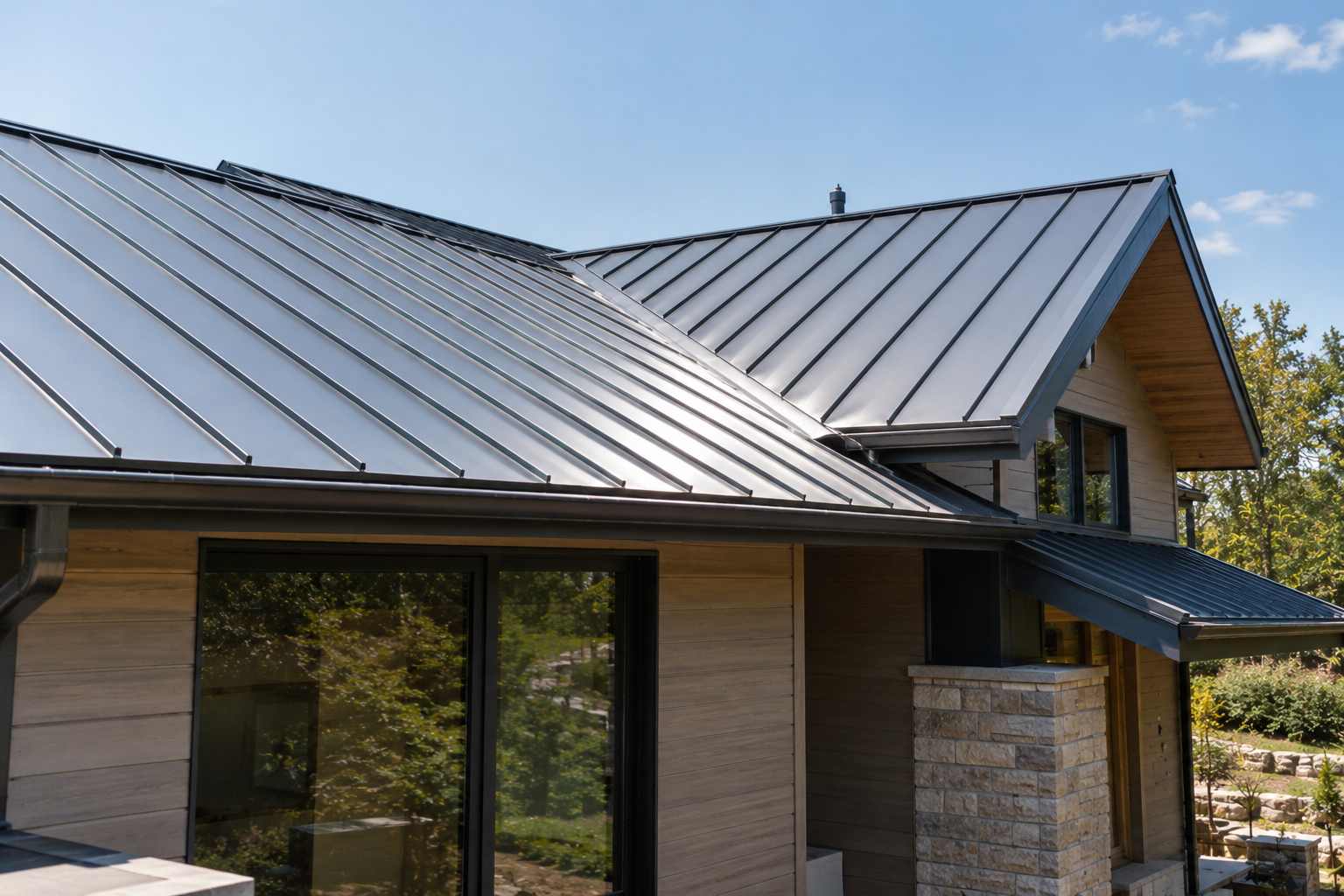
A roof affects more than the appearance of a house. It also absorbs sunlight and transfers heat toward the rooms below.
Reflective roofing materials can reduce unwanted solar heat gain, particularly in hot climates where air conditioning runs for much of the year.
Metal roofs made with recycled content may combine long service life with reduced demand for newly produced metal.
The ENERGY STAR guidance on cool roofs explains that high solar reflectance and thermal emittance help roof surfaces stay cooler in sunlight.
However, reflective roofing does not deliver the same energy savings in every climate. Homes in colder regions may gain less benefit, and winter heating demand also deserves consideration.
Compare tested reflectance ratings, expected service life and the manufacturer’s environmental documentation rather than choosing a roof based only on its colour.
For existing homes, our discussion of reflective exterior paint and heat absorption also explains how sun exposure and surface finishes affect building temperatures.
Best for Roof replacement projects in suitable climates.
10. Reused Clay Roof Tiles
Clay roof tiles have a long history in residential construction and can remain serviceable for decades when the material suits the climate and roof design.
Reclaimed tiles are available from salvage suppliers and buildings undergoing renovation.
Using sound secondhand tiles reduces demand for new manufacturing and prevents usable roofing material from becoming waste.
However, old tiles must be inspected carefully. Cracked, porous or weather-damaged pieces may fail after installation.
Matching the profile of an existing roof can also be difficult. Slightly incompatible tiles may leave gaps that allow wind-driven rain to enter.
Clay roofing can be heavy, so a qualified professional should confirm that the supporting structure can carry the intended system.
For a partial roof repair, salvaged matching tiles may be more useful than replacing an entire roof with new materials.
Best for Suitable roof repairs, restoration work and roof replacement projects.
Which Eco-Friendly Exterior Materials Are Worth the Money?
The lowest-carbon material is not necessarily the one with the most recycled content. A product manufactured nearby, used for decades and repaired instead of discarded may compare favorably with a heavily processed alternative shipped across the world.
| Material | Main Environmental Benefit | What to Check |
| FSC-certified timber | Renewable material with verified sourcing | Certification, durability and maintenance |
| Reclaimed brick | Reduces demand for new production | Weather resistance and condition |
| Recycled steel | Reuses metal resources | Recycled content and production emissions |
| Composite cladding | Potential recycled content and long service life | Product data and disposal options |
| Low-carbon concrete | Reduces cement-related emissions | Strength, durability and EPD data |
| Reclaimed stone | Reuses durable natural materials | Transport and suitability for outdoor use |
| Cellulose insulation | Uses recycled paper and reduces heat loss | Moisture control and installation quality |
| Cork insulation | Renewable material from harvested bark | Cost, availability and system approval |
| Reflective metal roofing | Can reduce cooling demand | Climate and tested reflectance values |
| Reused clay tiles | Extends the life of existing roofing materials | Condition, weight and compatibility |
How to Check Environmental Claims Before Buying
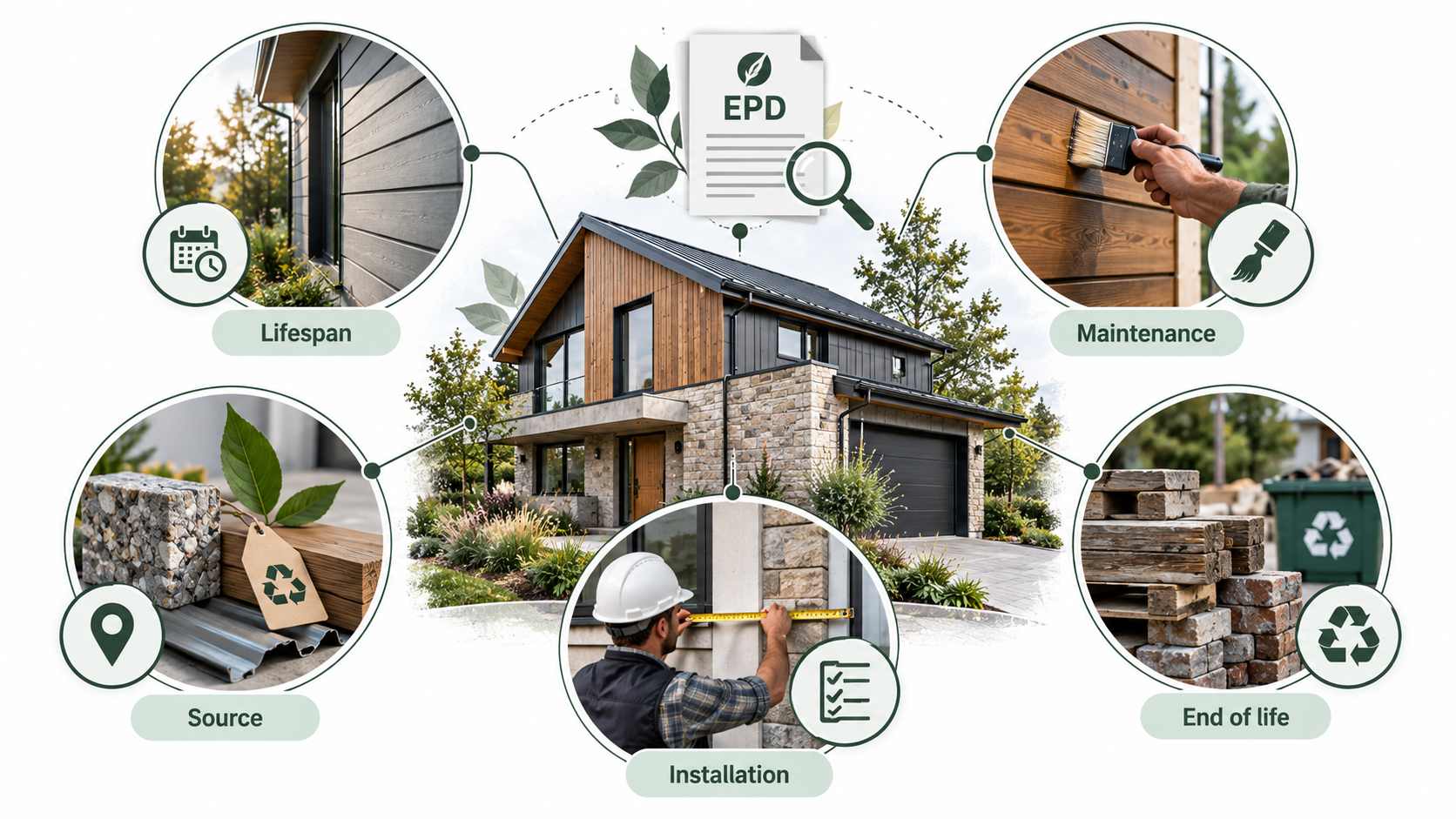
Product packaging may mention recycled content, carbon savings or sustainability without providing enough information to compare alternatives.
Ask manufacturers for an Environmental Product Declaration where available. An EPD reports environmental impacts using a defined assessment method, allowing more meaningful comparisons between products covered by compatible rules.
A sustainable construction project also needs careful planning before materials are purchased. Accurate measurements reduce offcuts, unnecessary deliveries and leftover products that may never be used.
- Expected lifespan – How long should the product last in your climate?
- Maintenance – Will it need painting, sealing or frequent replacement?
- Source – Where is it manufactured, and what recycled or certified materials does it contain?
- Installation – Does the product meet local building requirements and suit the existing structure?
- End of life – Can the material be reused, recycled or safely disposed of?
For older homes, repairing a sound roof, restoring exterior timber or reusing existing masonry may avoid more waste than removing usable materials to install something new.
Choose Materials That Will Last on Your Home
Reclaimed bricks and stone are sensible choices for small garden projects. Responsibly sourced timber works well for many exterior features, and suitable lower-carbon concrete can reduce emissions from construction that requires cement.
For walls and roofs, compare the full product specifications rather than relying on labels such as green or eco-friendly. Durability, local weather, maintenance and installation quality will influence how long each material stays useful.
Start by keeping what is still in sound condition. Replace damaged components with materials suited to the building, and ask suppliers for evidence behind their environmental claims. A home that needs fewer repairs and replacements over the coming decades will generally create less construction waste.